BLACK & WHITE. 3 models, 2 accompanying booklets
2020 – 2022
The work was created under the influence of the Corona lockdowns and the large Black Lives Matter demonstrations in 2020. It forms a self-contained trilogy, but was simultaneously integrated into the overall ›cabinet of curiosities‹ concept of the exhibition Cabinet of Exhaustion.
Concept / models / texts: Otmar Wagner, Model construction: Sophie Eidenberger, Otmar Wagner, Substructures: Mathias Lenz,Text editing: Katharina Fischer
BLACK & WHITE 1 – PEOPLE DYEING
(Homage to Peter Basseler)
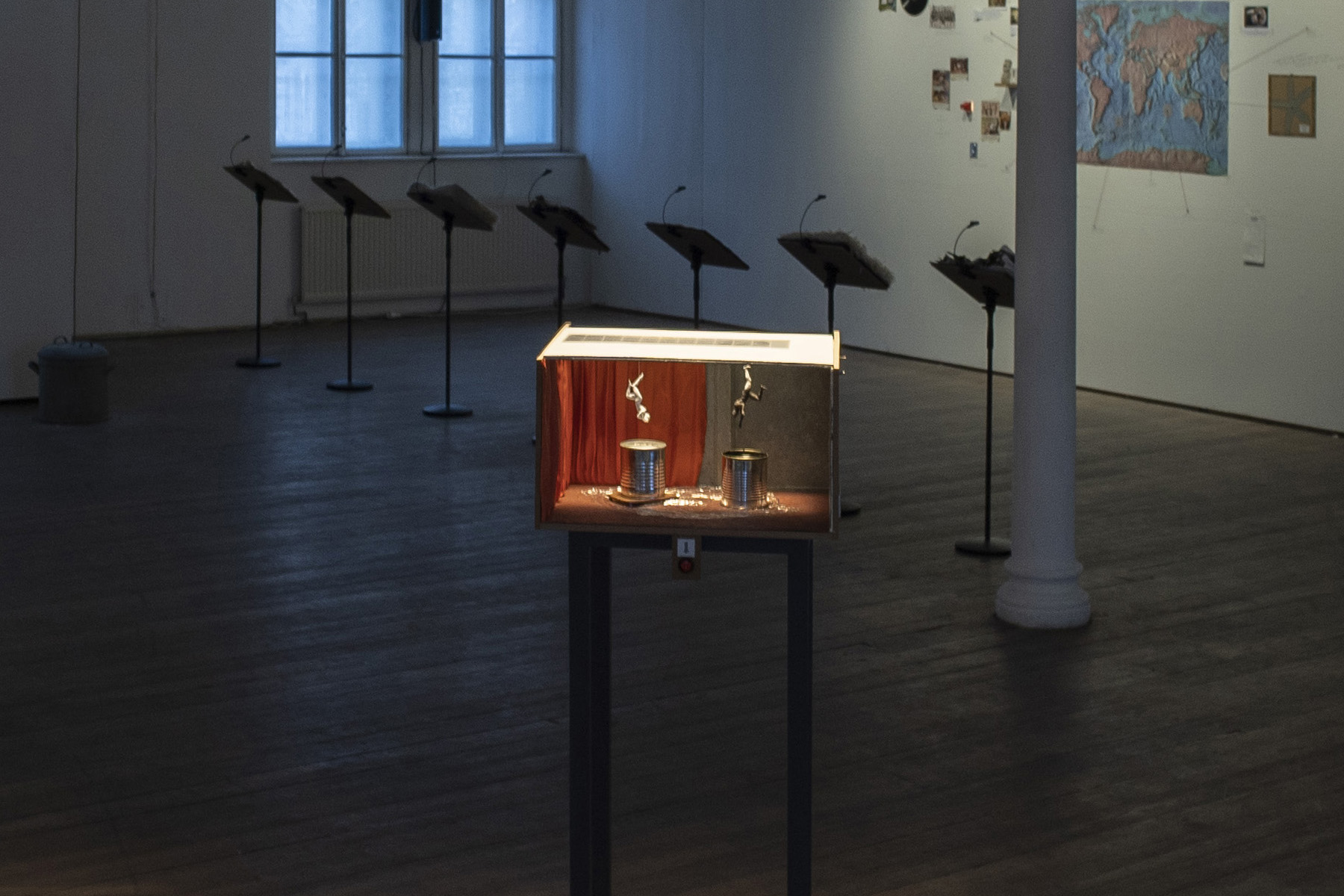
Model at a scale of 1:25; L: 42 cm, W: 40 cm, H: 23 cm
various materials, battery-operated mechanism, push button
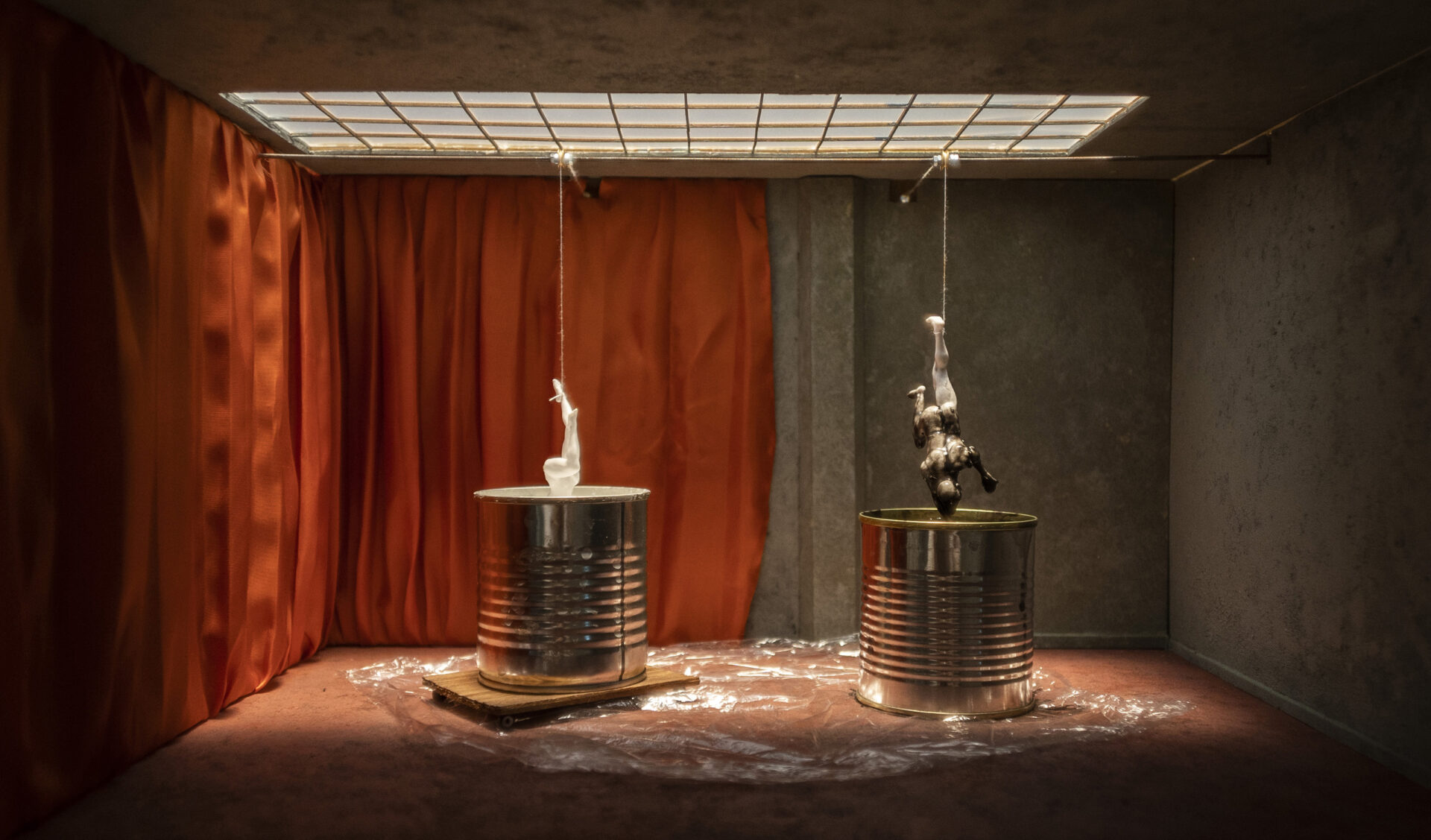
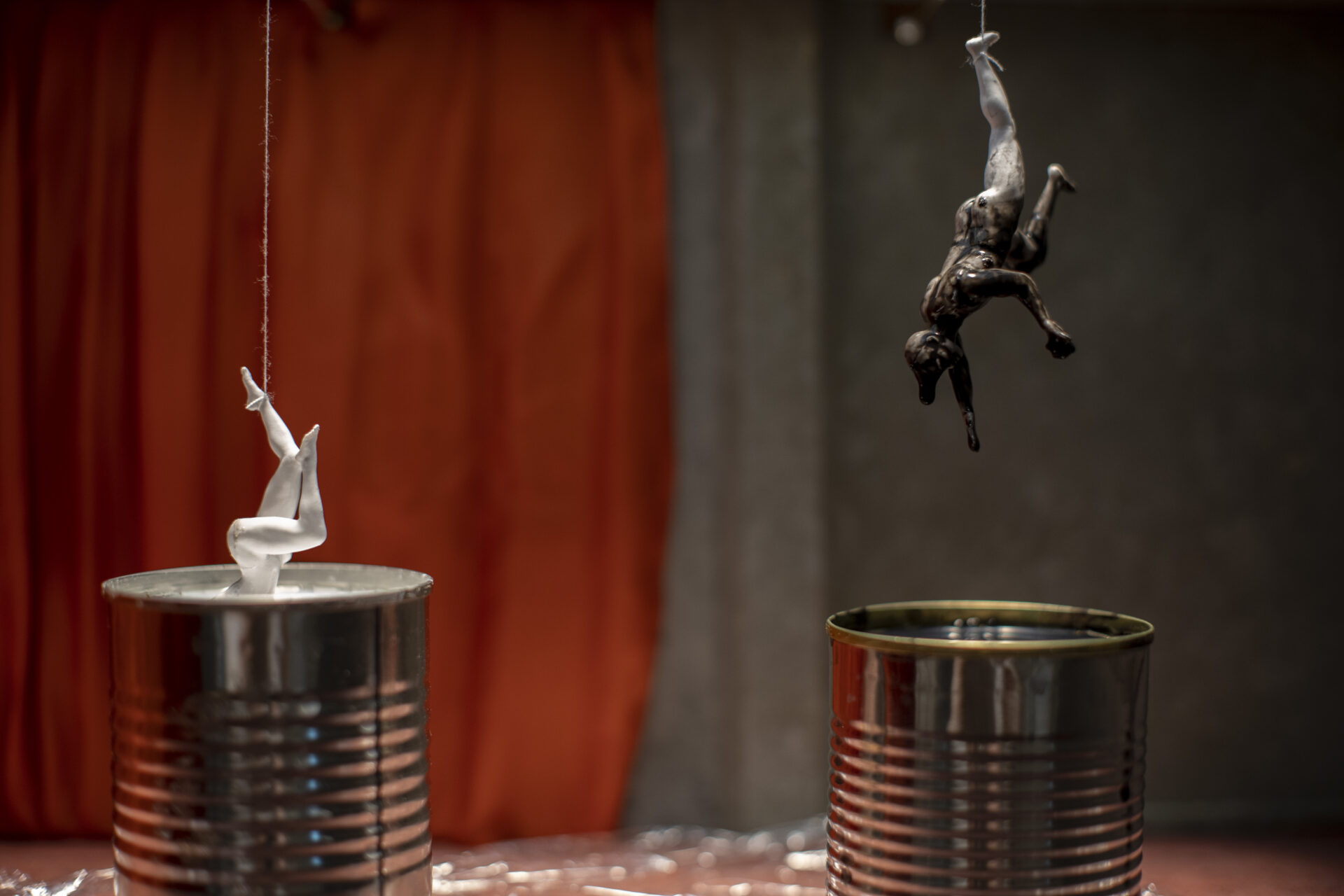
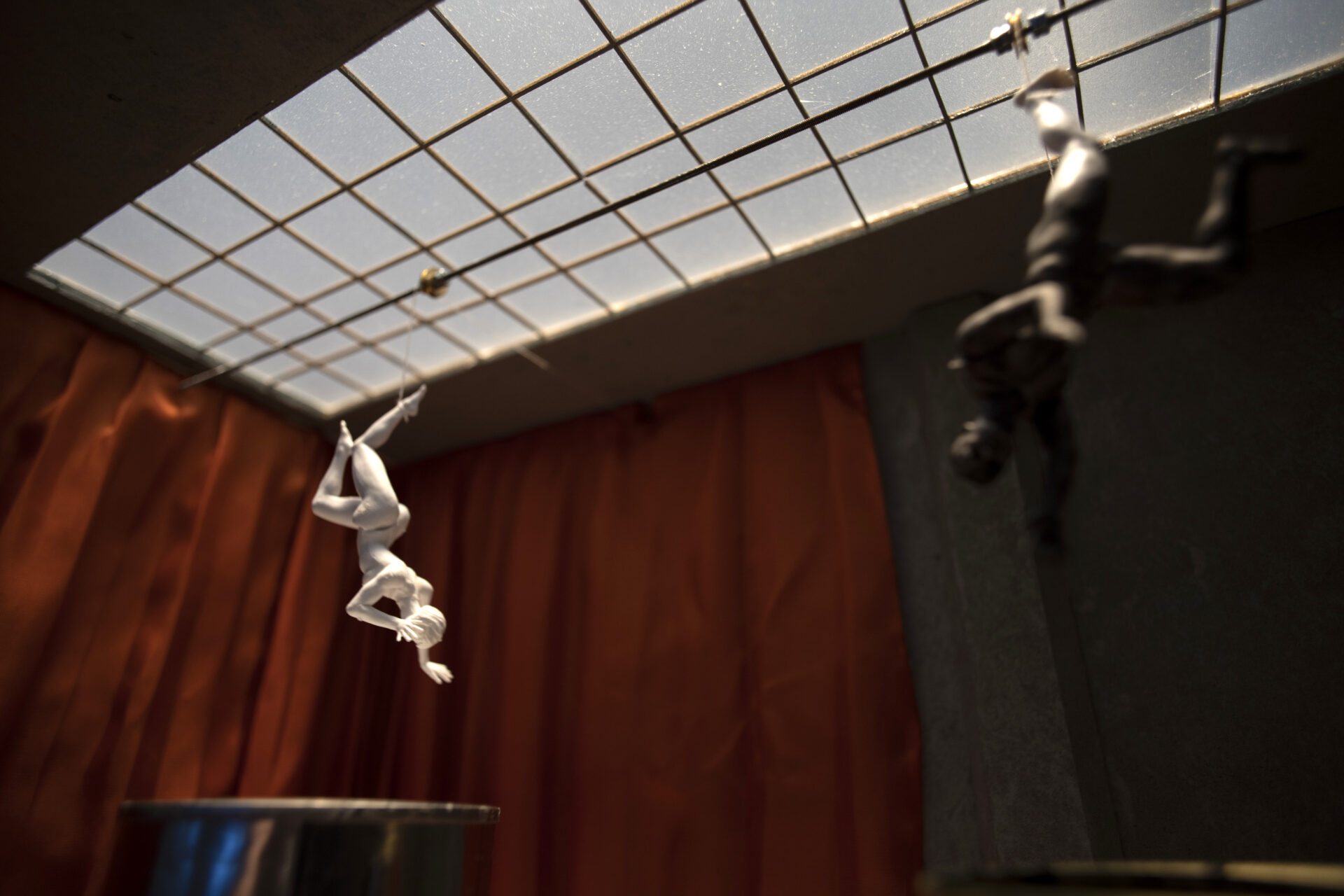
This work is a ›cover version‹ of Peter Basseler's display case CROCODILE DYEING (1983), which is part of the Robert Simon Collection at the Celle Art Museum. The homage to the artist refers not only to this model, but generally to Basseler's method of relating his model objects to a text or short story in a unique way.
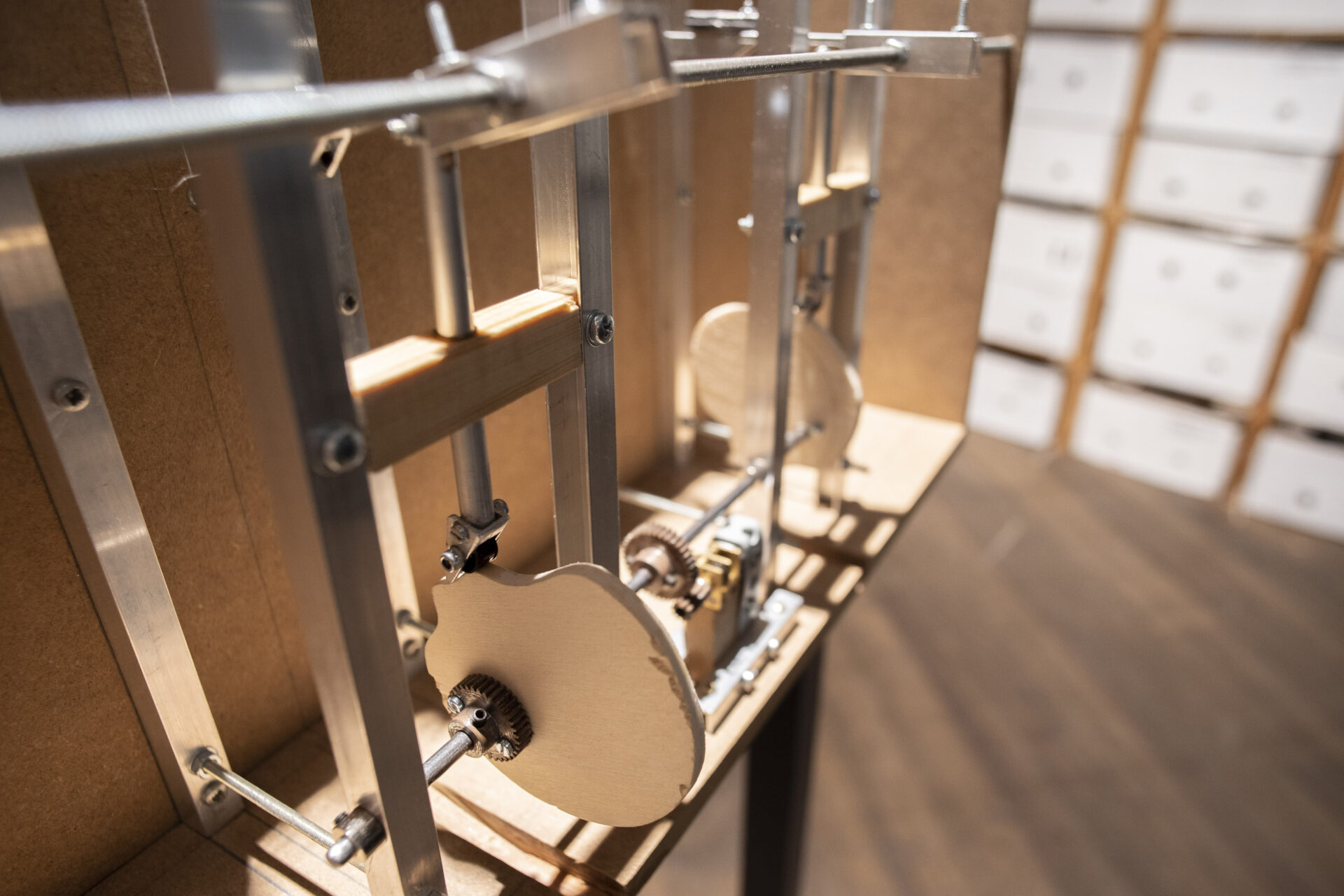
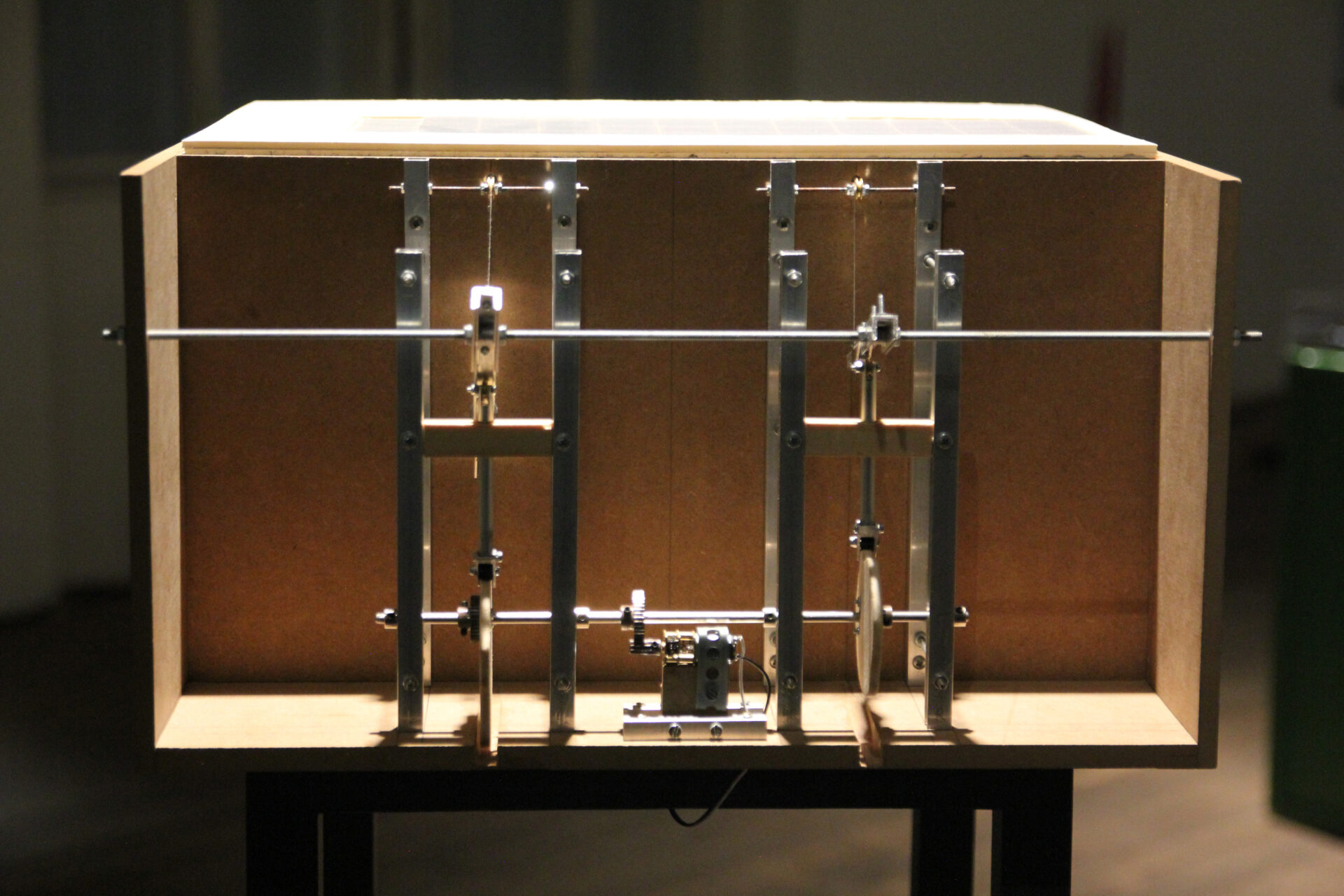
A special electromechanical deflection system on the back of the model repeatedly dips the two hanging figures in white or black paint and pulls them up to the ceiling. This process continues as long as the button on the front is held down.
BLACK & WHITE 2 – Street/Gallery + accompanying booklet
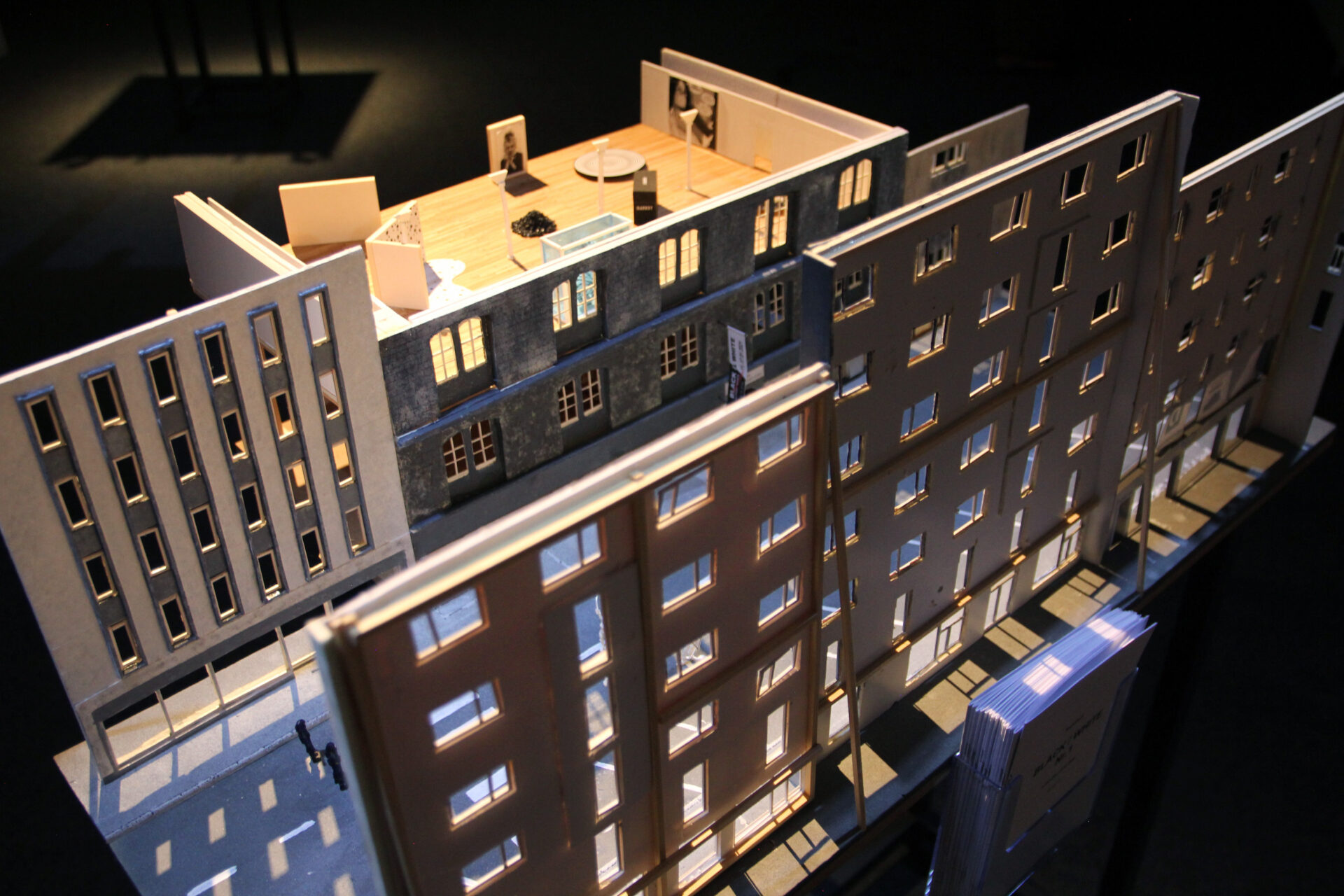
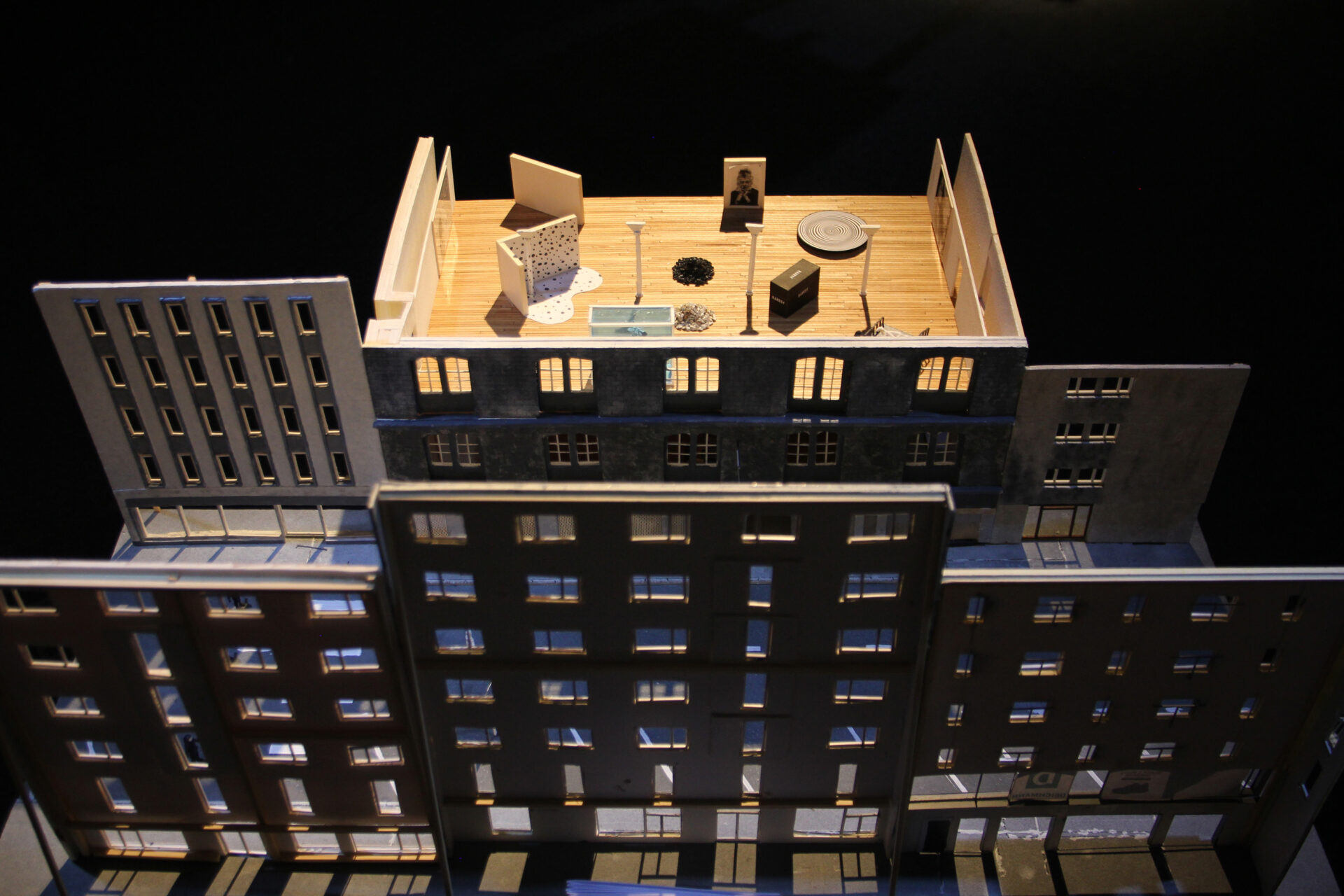
Model at a scale of 1:50; L: 100 cm, W: 68.5 cm, H: 39 cm; various materials, electromechanical turntable, pushbutton

THE STREET
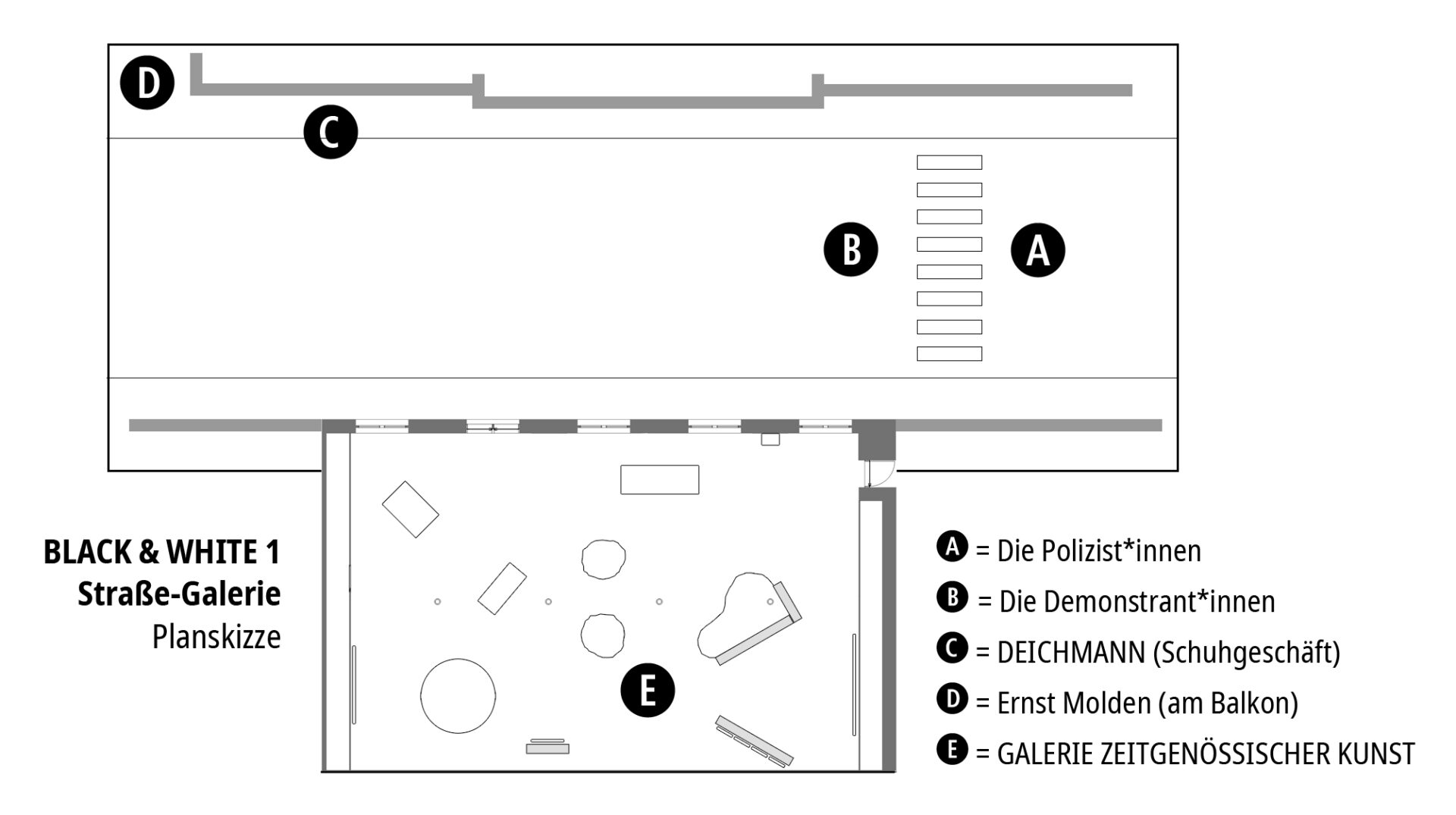
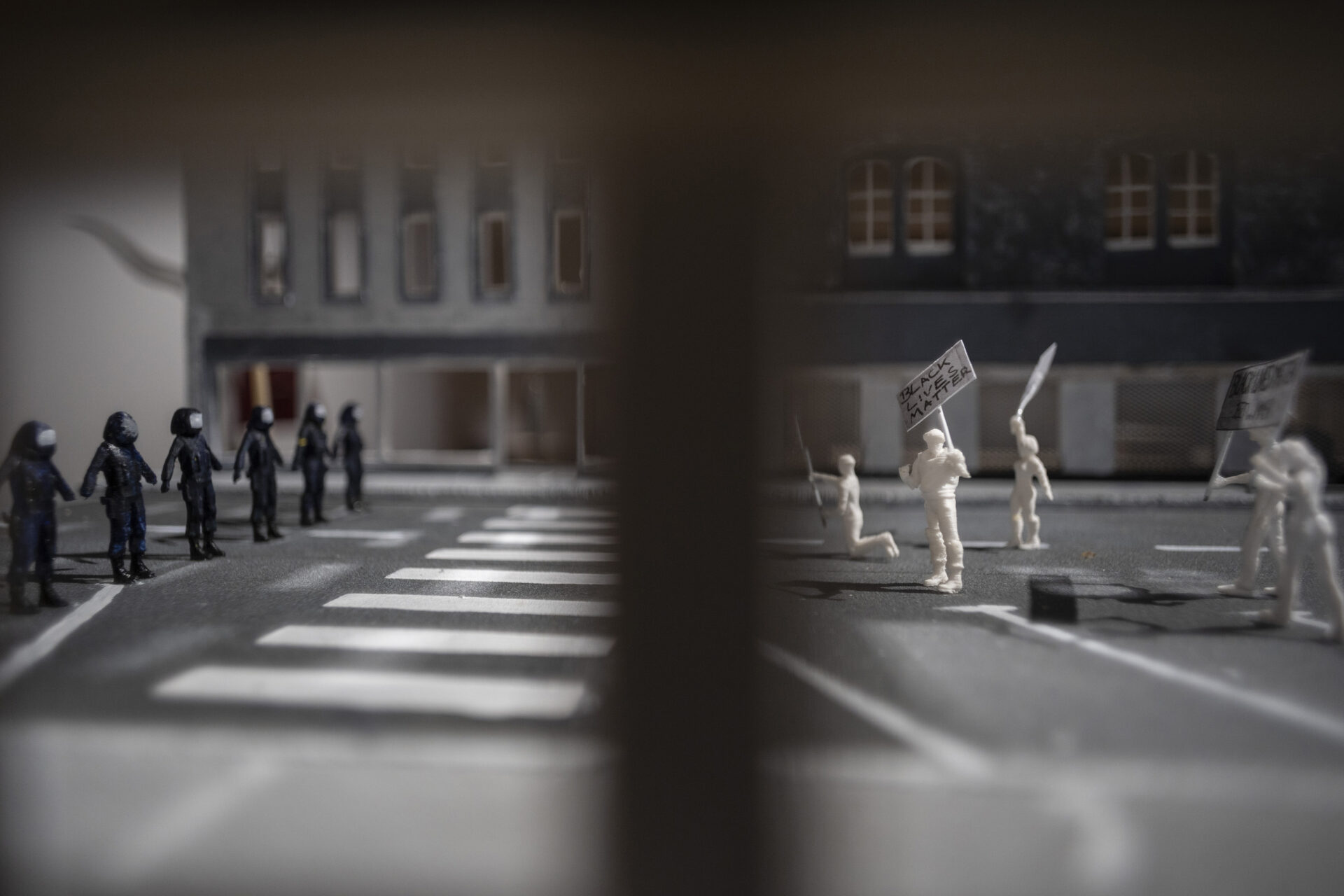
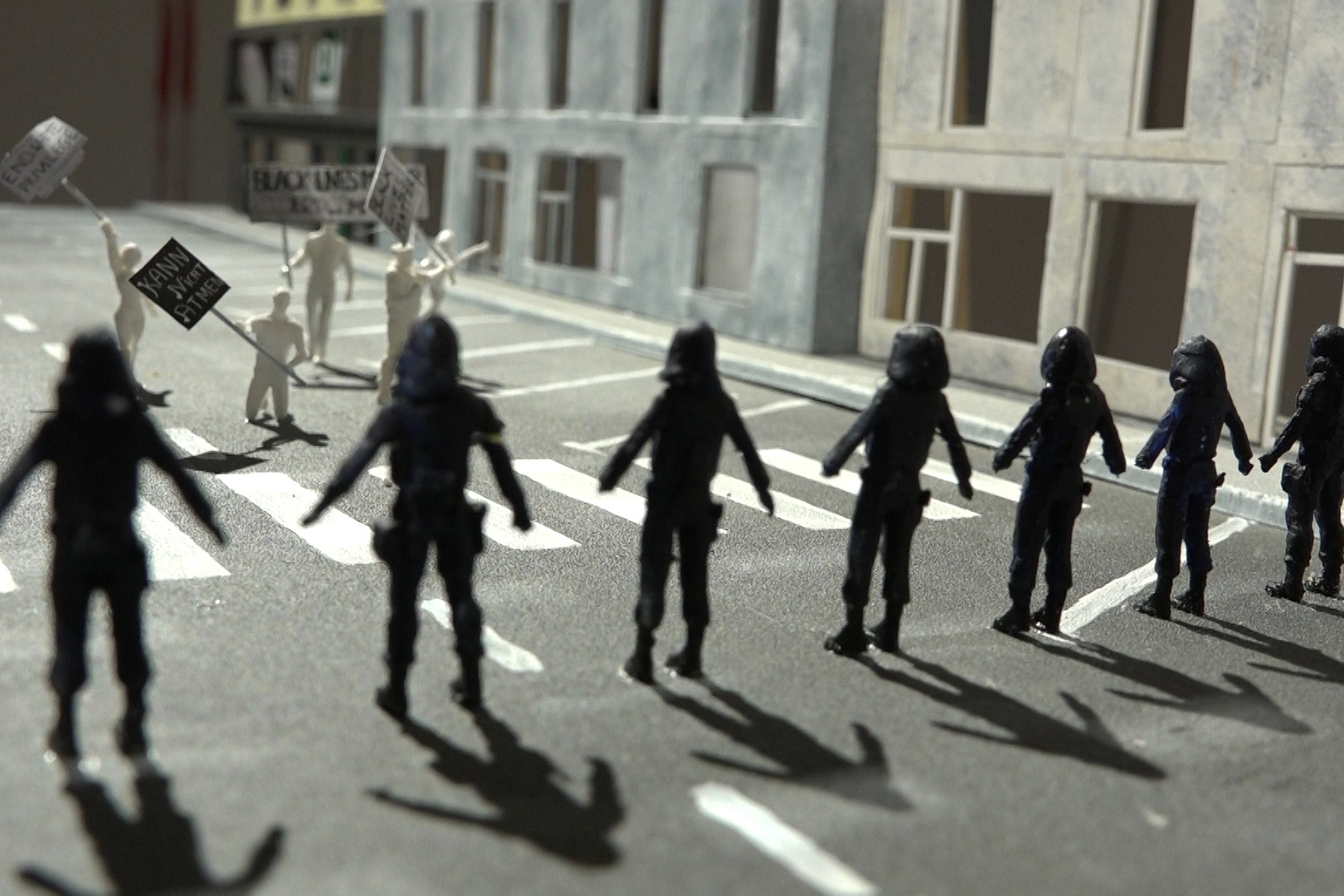
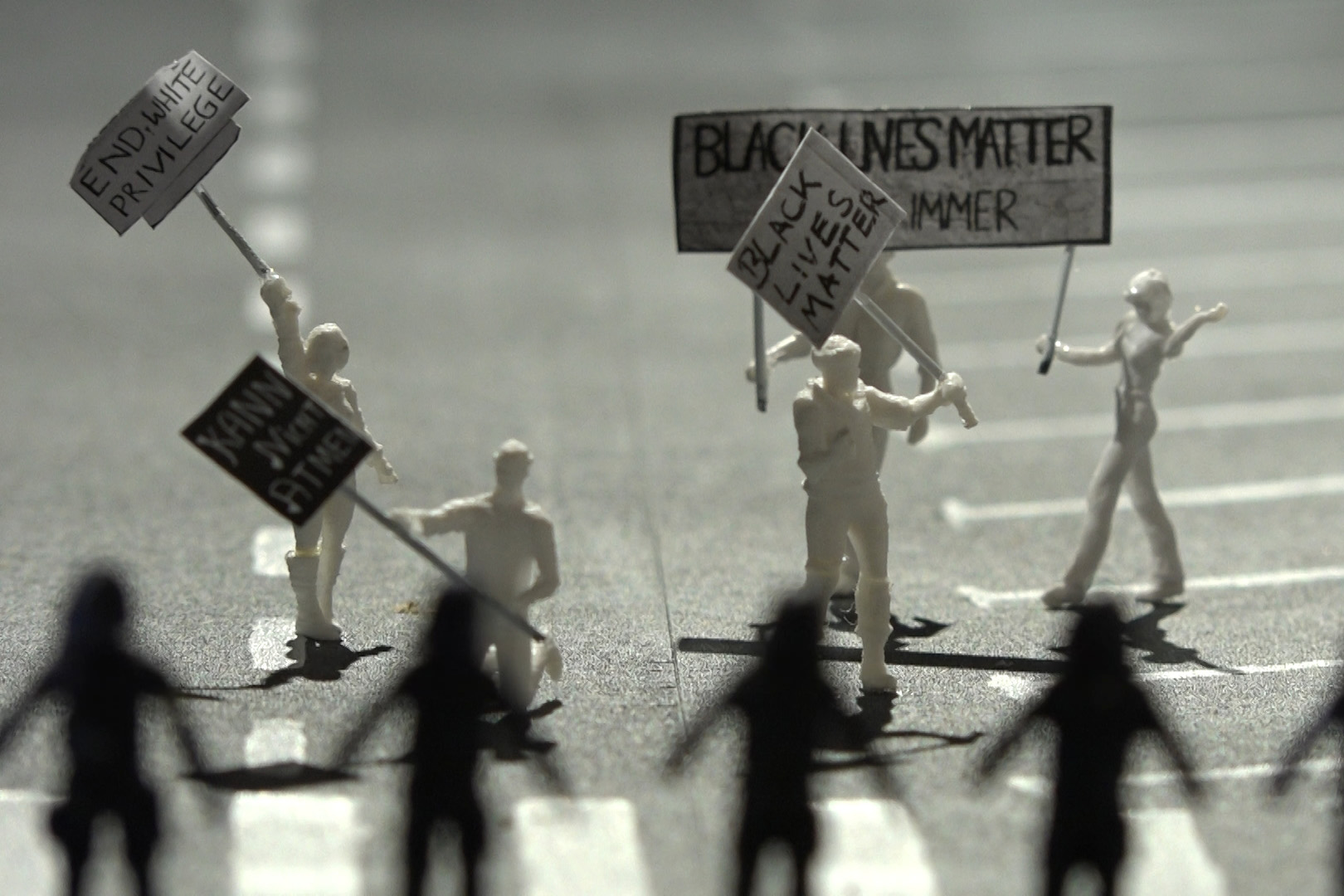
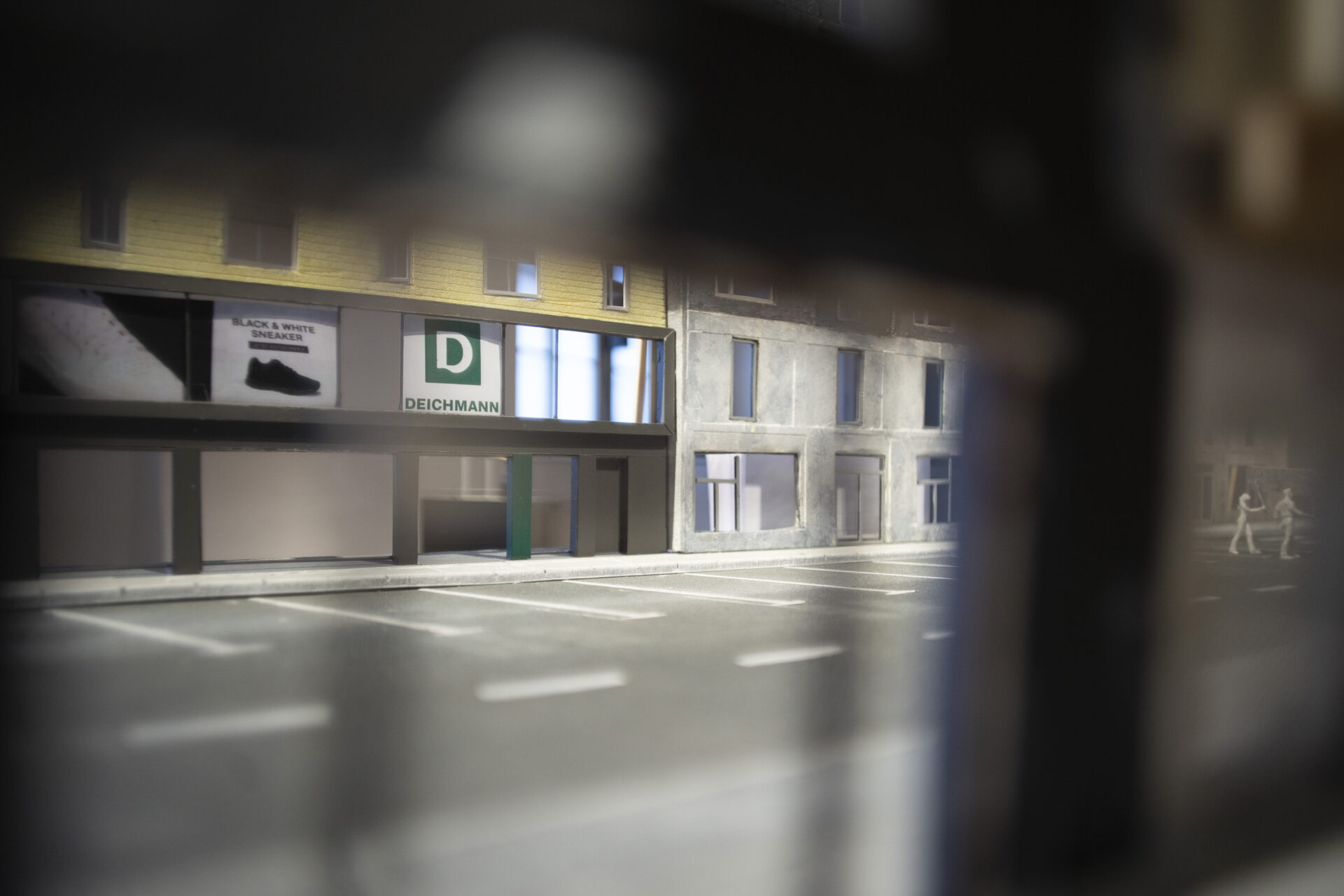
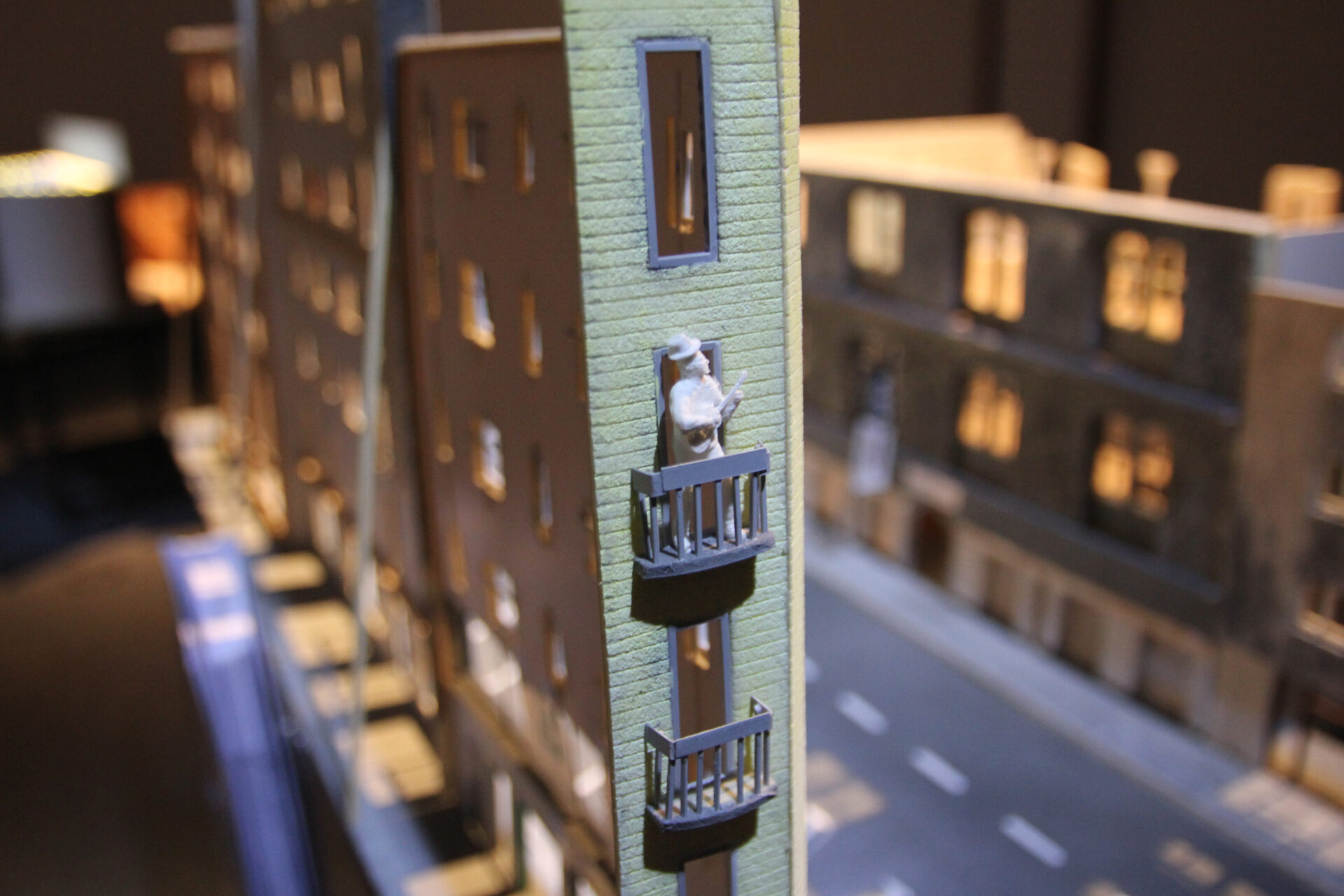
The scene depicted in the model took place in January 2021 in a Western European metropolis in a German-speaking country. During a so-called ›Lockdown‹, BLACK LIVES MATTER demonstrators and police officers face off. The street had been cordoned off over a wide area beforehand. The shops (here a shoe store) are closed due to the lockdown, as are the cultural institutions (such as the Gallery of Contemporary Art; see below). Only the Austrian songwriter Ernst Molden can be seen with his guitar on a balcony.

THE GALLERY
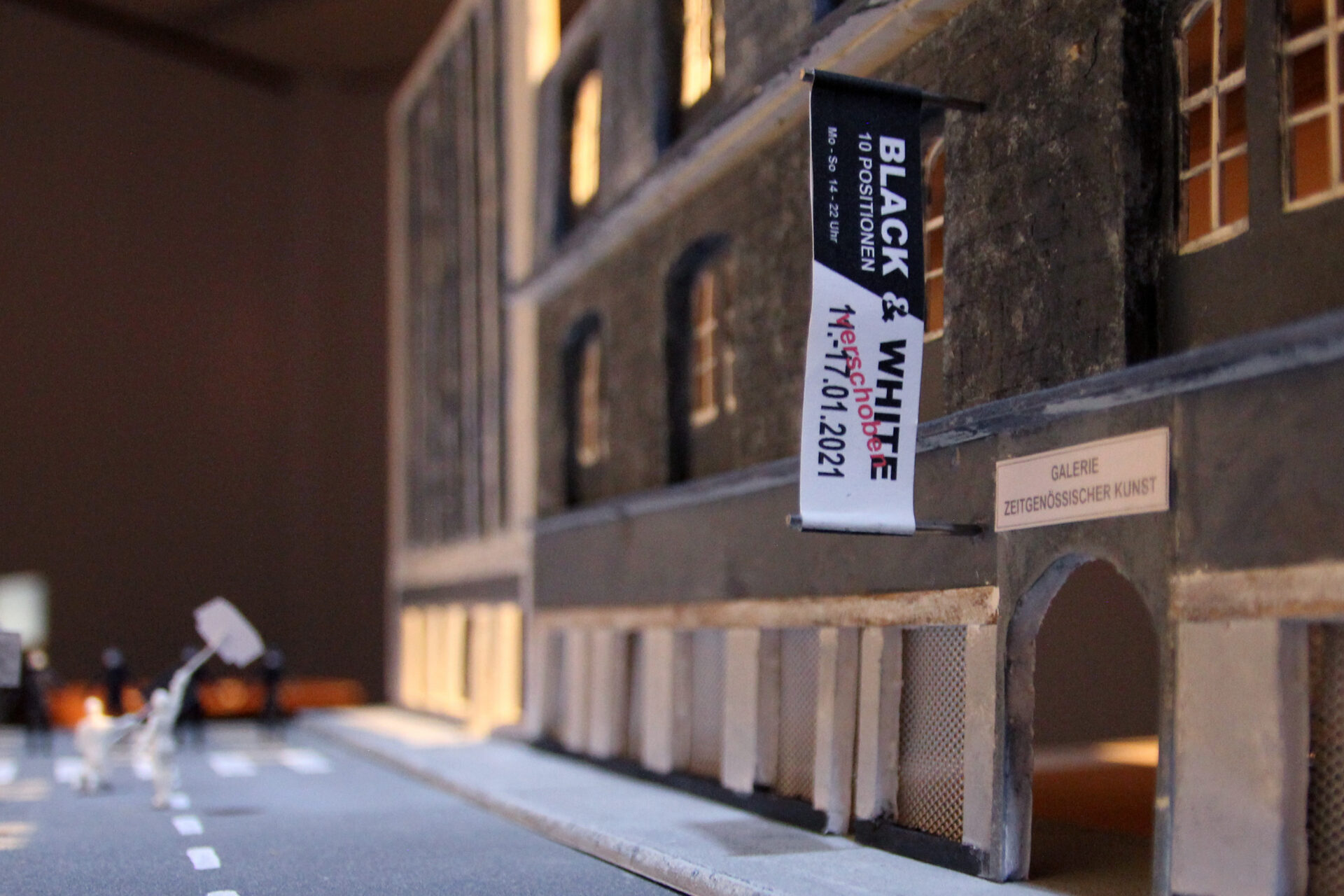
The GALERIE ZEITGENÖSSISCHER KUNST (Gallery of Contemporary Art) was founded in 1981 following a squat in a major city in a German-speaking country. Since then, changing curators, usually working collectively, have proven their ability to realize exhibitions of high artistic quality, moving beyond all mainstream trends and integrating social, ecological, political, and current socially relevant issues.

The following principles and objectives were formulated as the basis and objectives of this alternative exhibition concept:
We call for a rethinking of the role of art and culture in society.
We call for time to reflect and experiment.
We need time to fail and time to enjoy success.
We believe in the unconditional freedom of artistic expression.
The unconditional freedom of expression is part of freedom of speech, and therefore part of the European Convention on Human Rights.
Resource imagination, creativity, and beauty are unlimited and sustainable. They are purposeless, but not senseless.
Cultural policy and sustainability policy must be more closely linked. This is something that politics must address.
Sustainable development is a discursive process involving ecology, economics, social issues, and culture.
Sustainability without a cultural dimension is unthinkable. Art without reflection is unthinkable.
The closer you look at a sentence, the further away it looks back.
THE GALLERY EXHIBITION
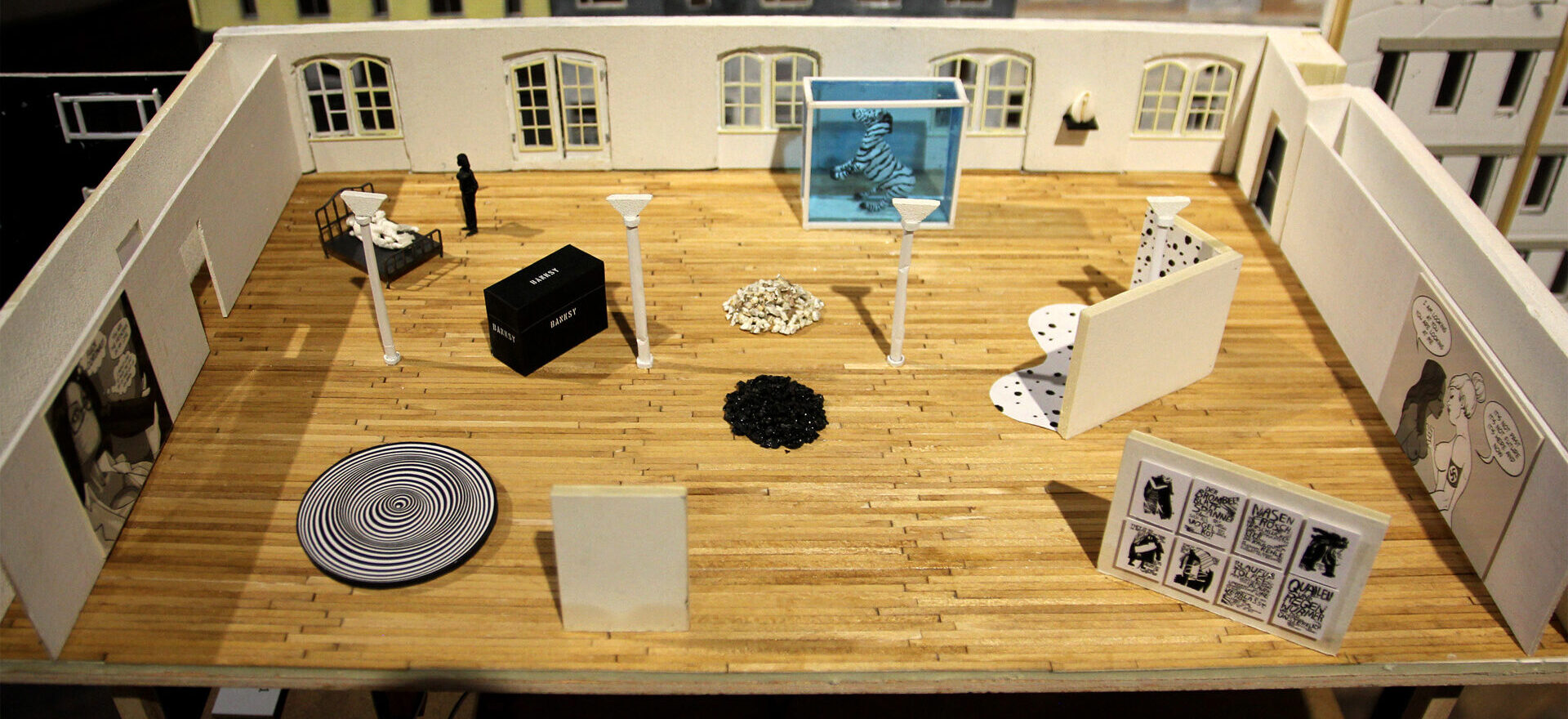
The exhibition ›BLACK & WHITE – 10 Positions‹ was planned by CCC – conceptual curator collective since mid-2019 and was scheduled to run from January 11 to 17, 2021. Due to the pandemic, it has been postponed indefinitely.
Behind the anonymously operating curatorial collective CCC is a community of art experts who, regardless of gender, age, religion or worldview, sexual orientation, ethnicity, or social standing, advocate for art that transcends boundaries. Their aim is to critically examine contemporary art movements, explore the risks and side effects of electronic art, question the use of free technologies as artistic standards, and establish a different, non-hierarchical art discourse. CCC explicitly rejects the notion of a ›niche of utopian art‹ - they see themselves instead as representatives of a civil society in which ecological, economic, social, and cultural issues are constantly renegotiated. In an interview with the CCC collective in the taz newspaper on April 16, 2019, one of the curators stated:
»It’s a shame that it's almost impossible to find us online, as we’re always being confused with that Polish shoe shop. People just don’t get it. And then they post sneakers instead of art. But the worst thing is that we’re constantly being confused with the Chaos Computer Club. You just don’t have a chance against that. I think we need to change our name, our logo, our identity and our online presence. I think we need to change quite a lot so that we can finally become what we actually are.«
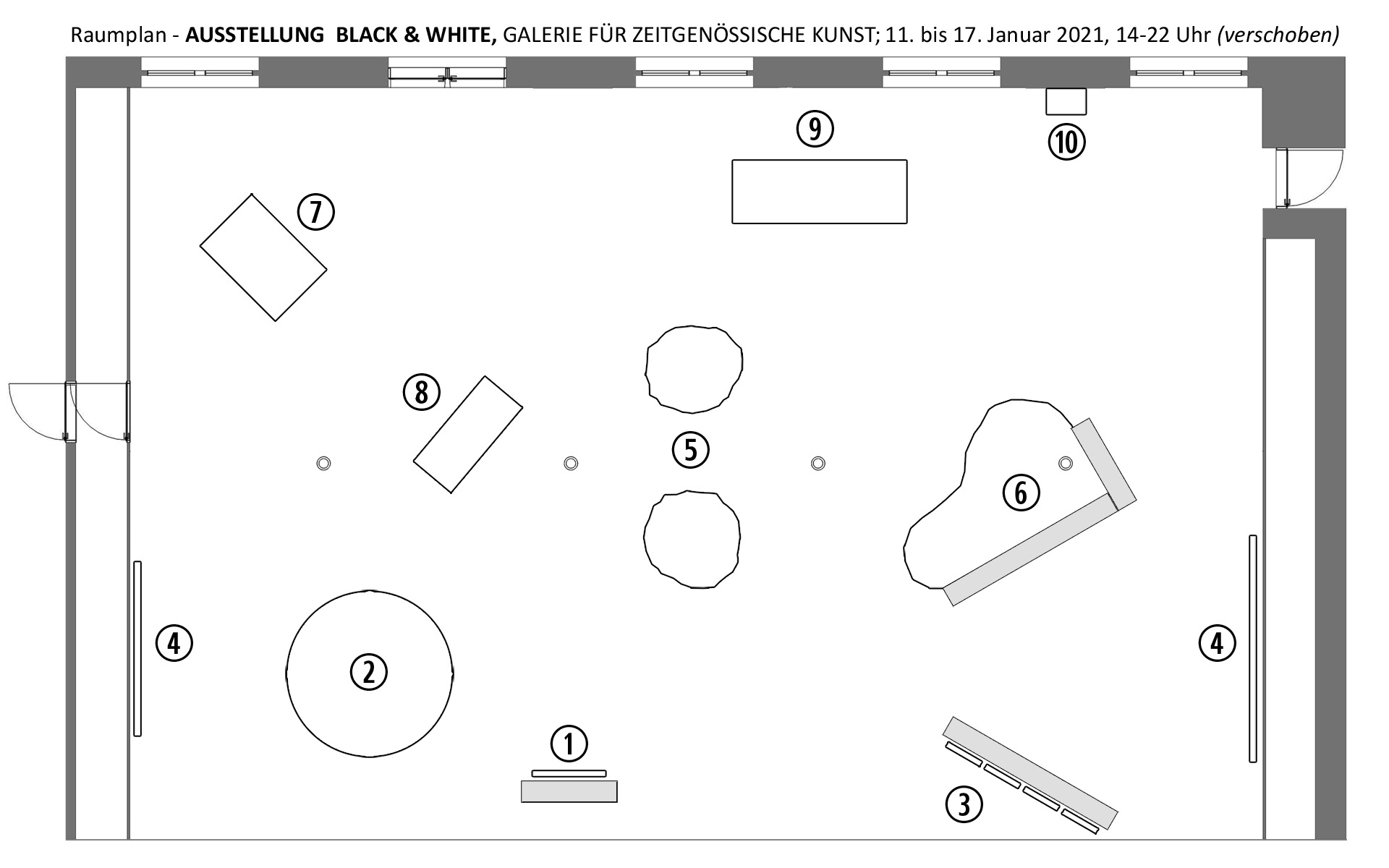
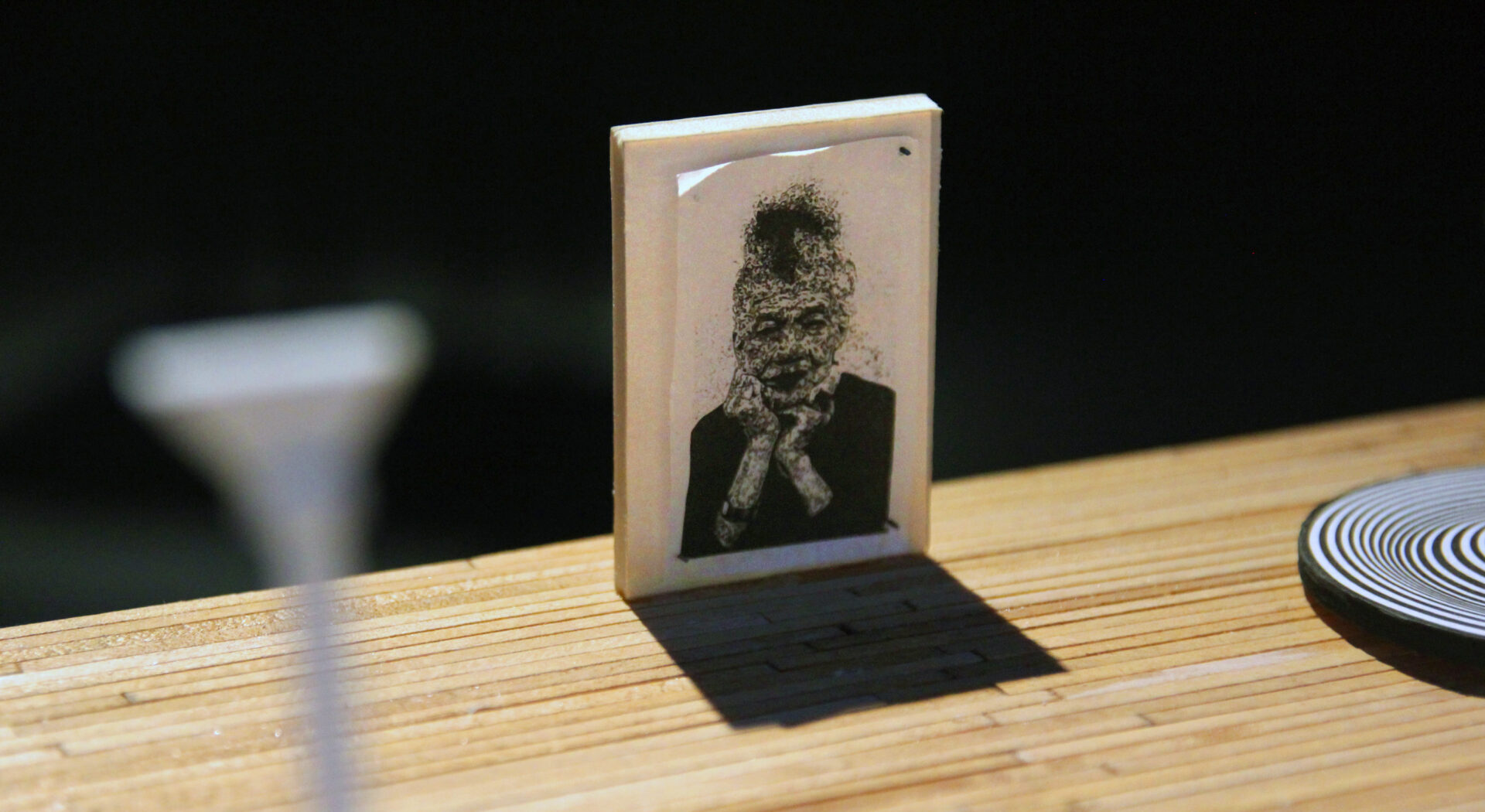
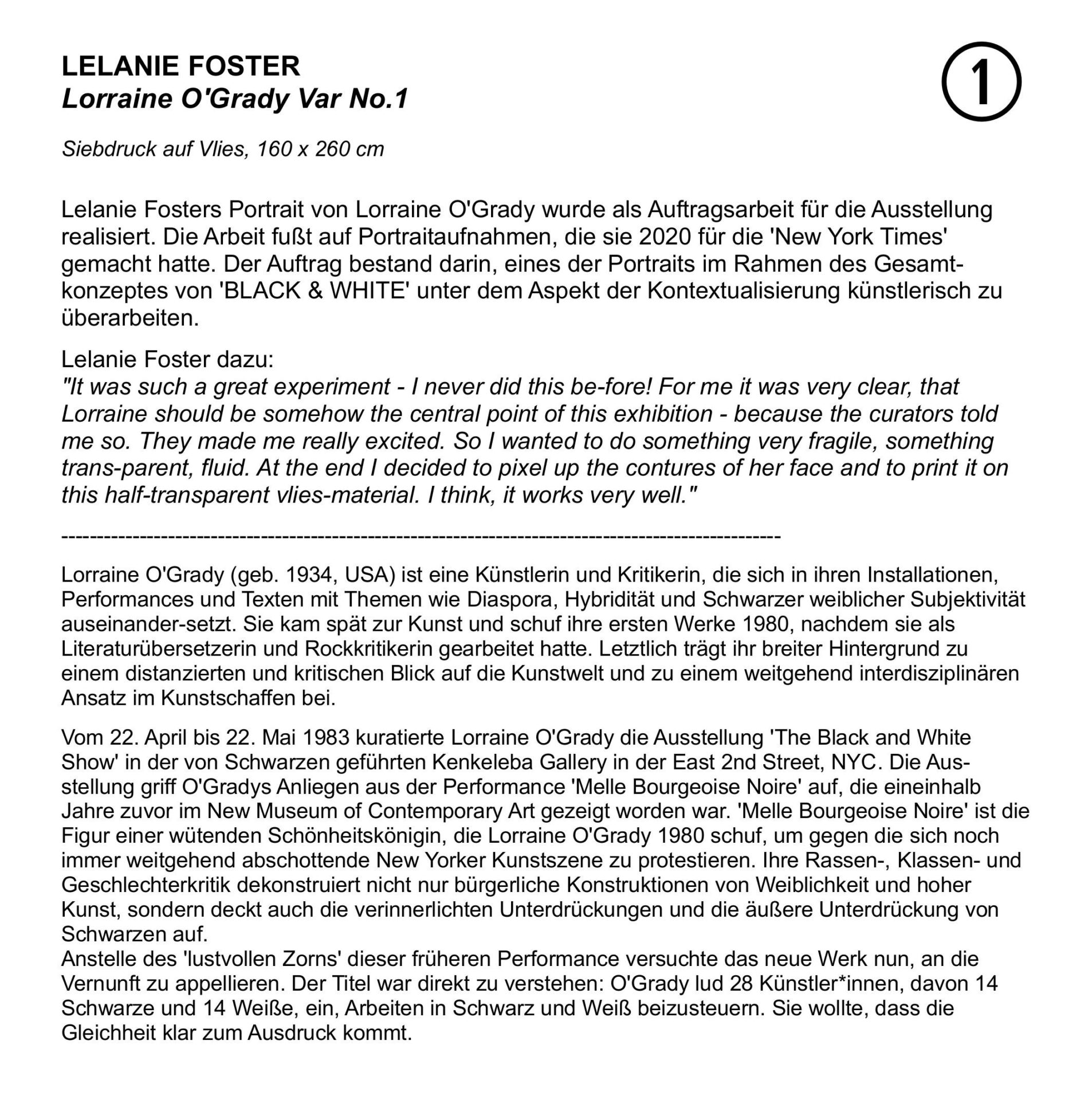
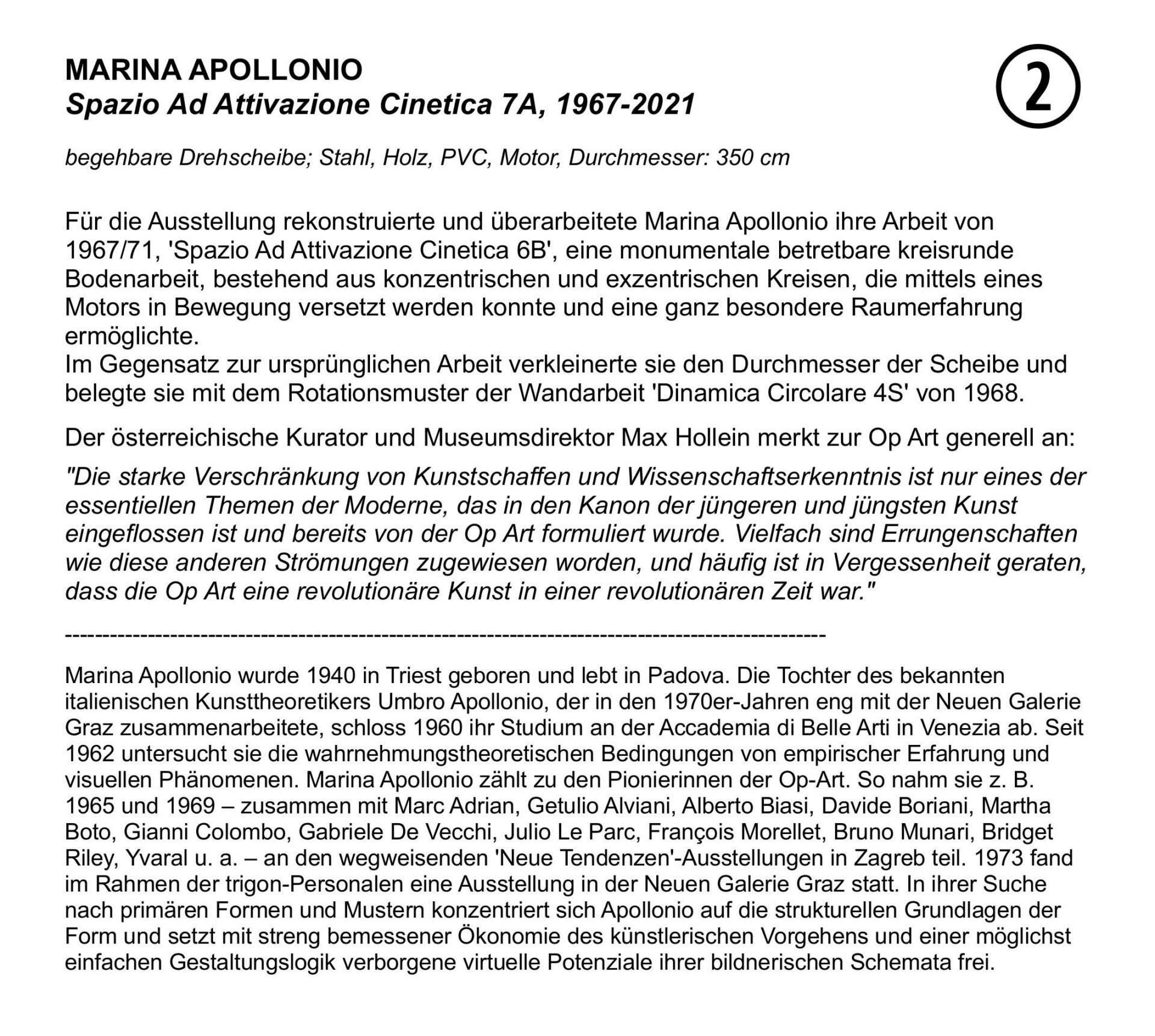
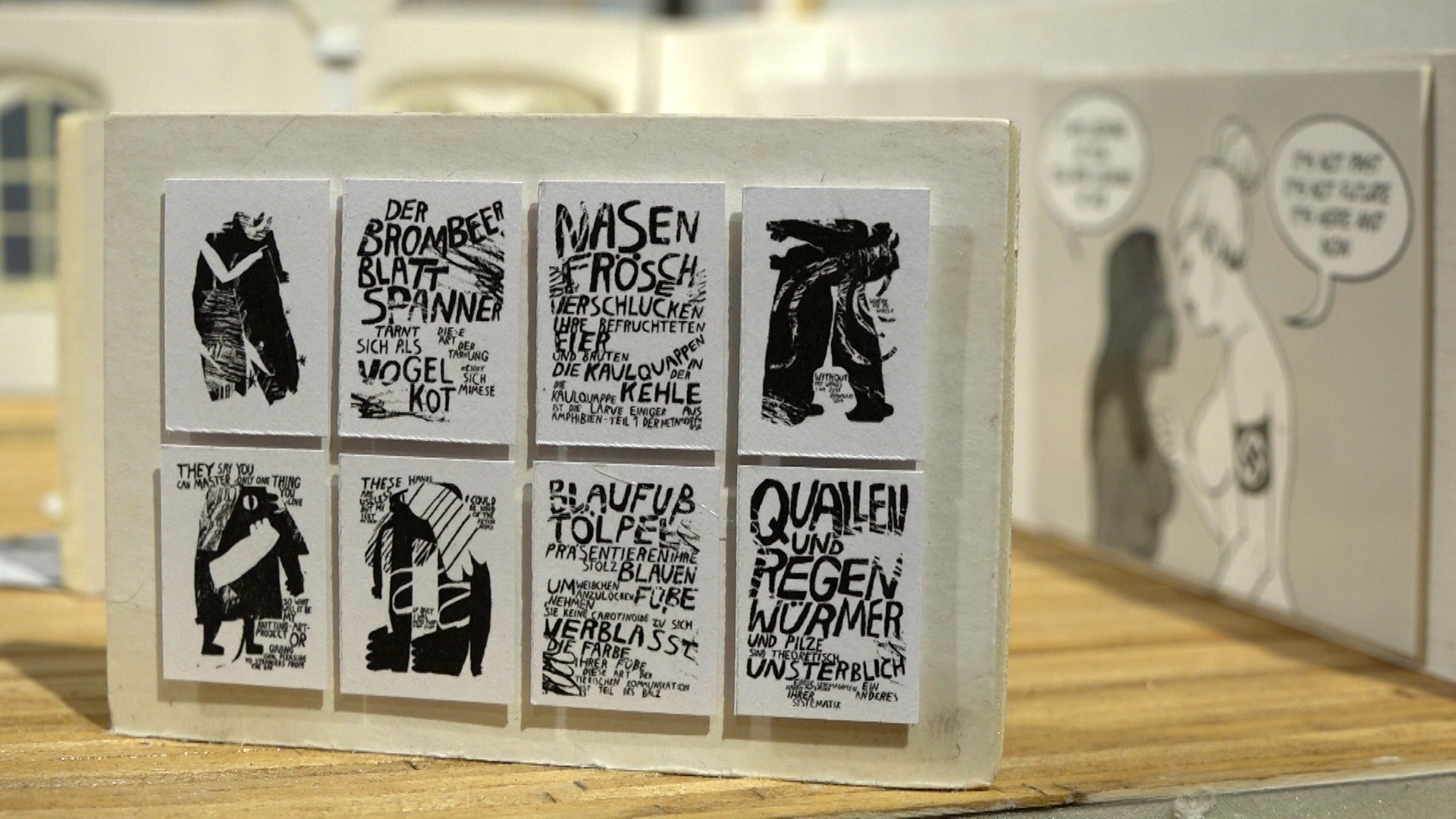
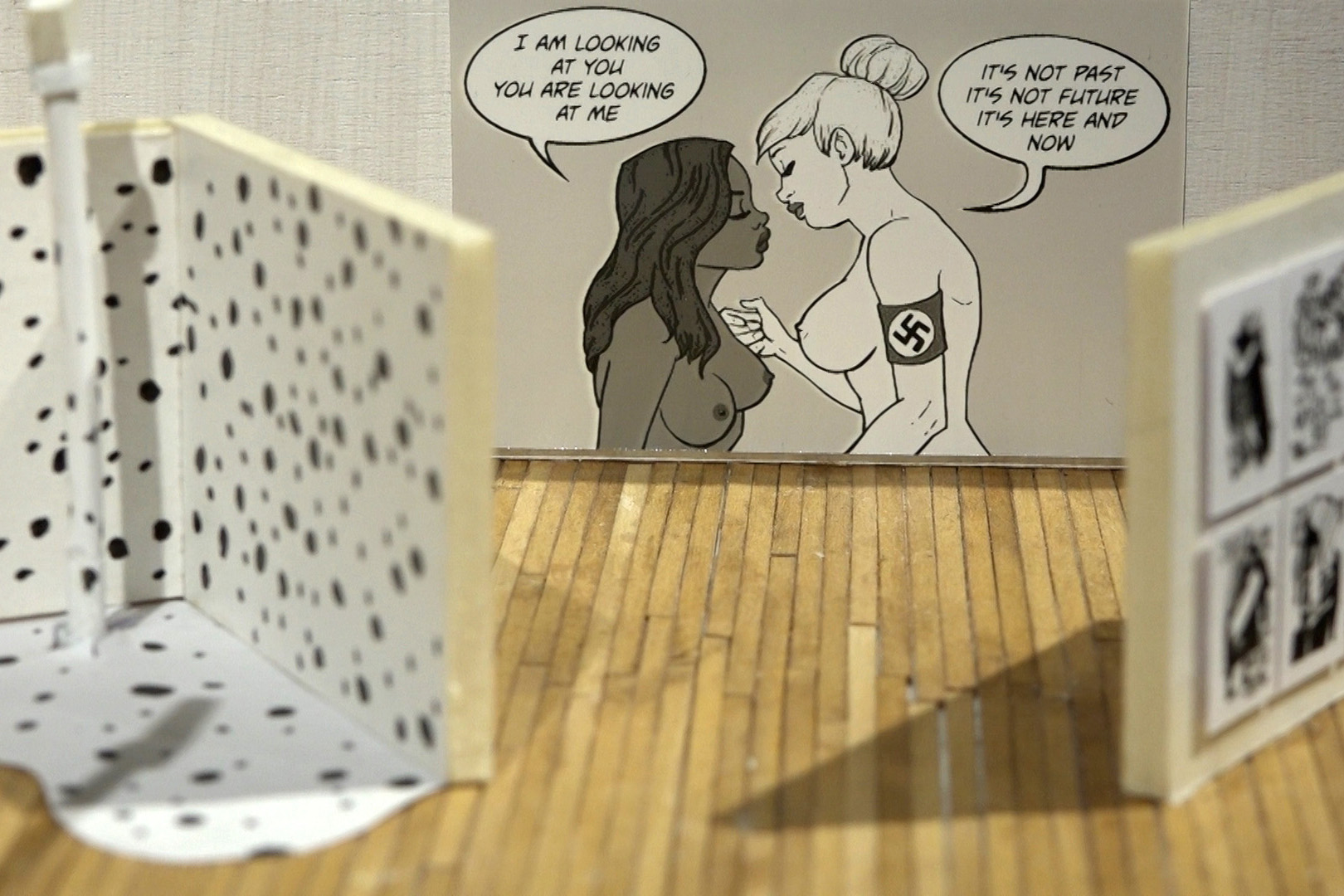
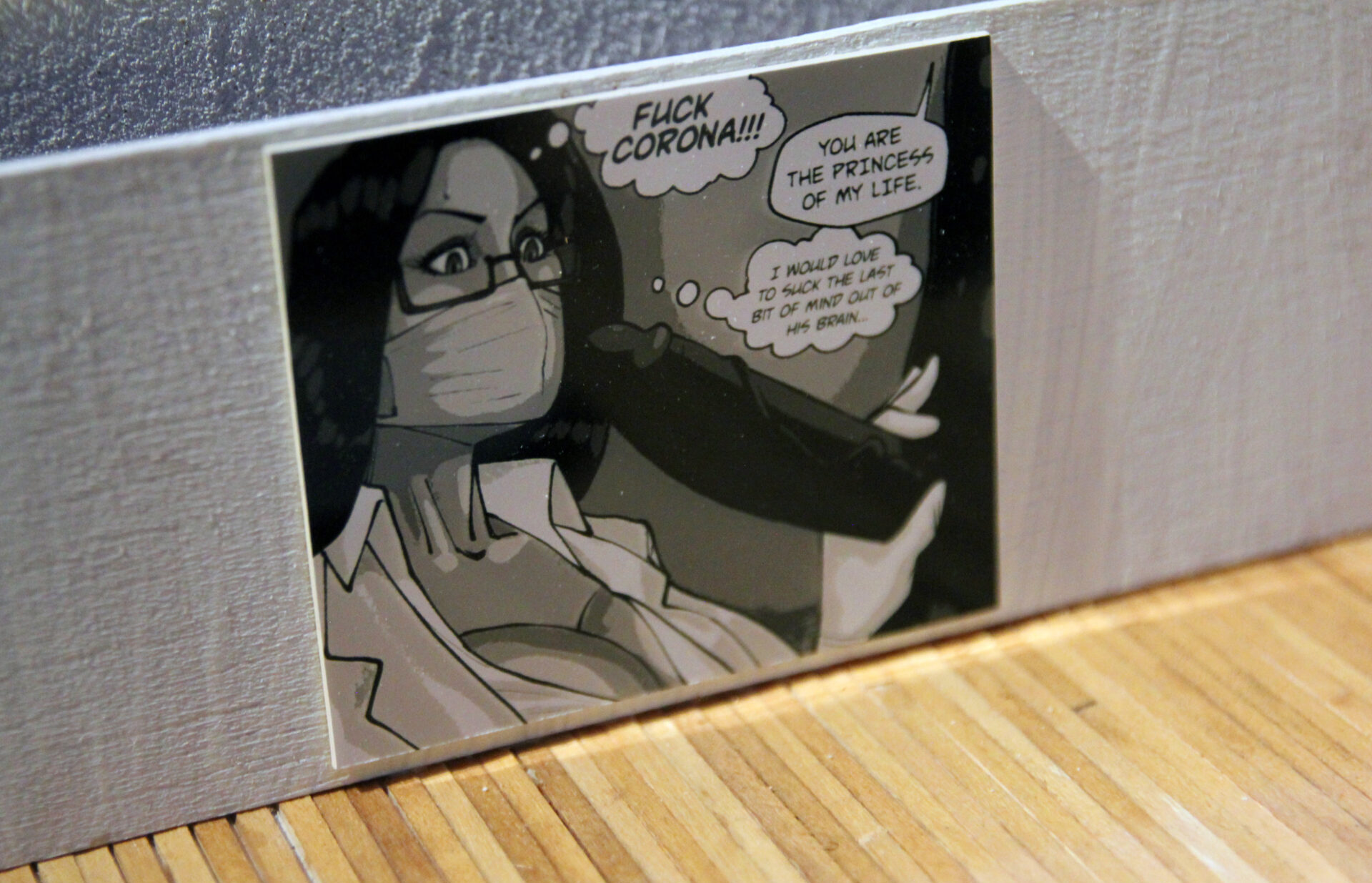
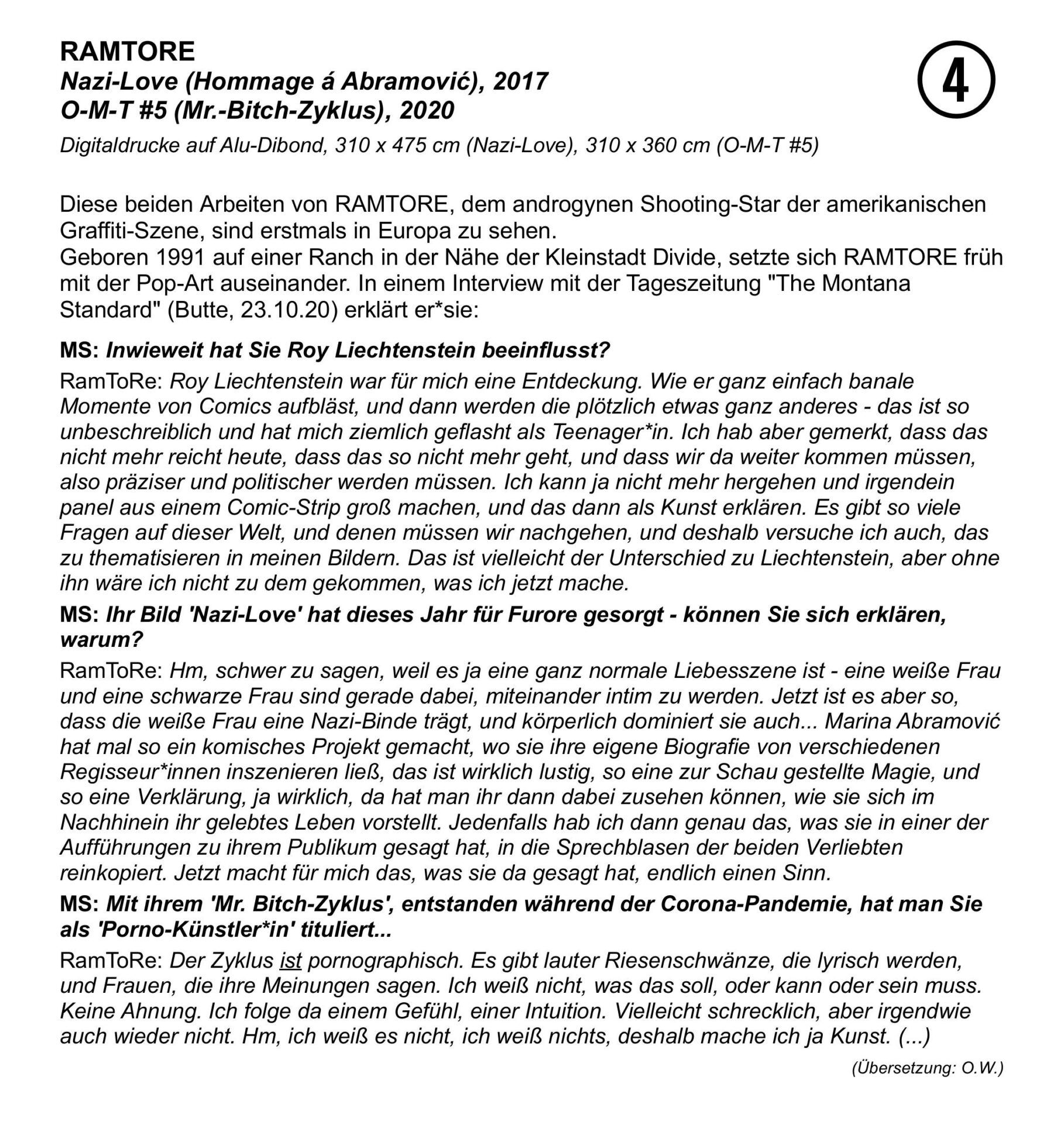
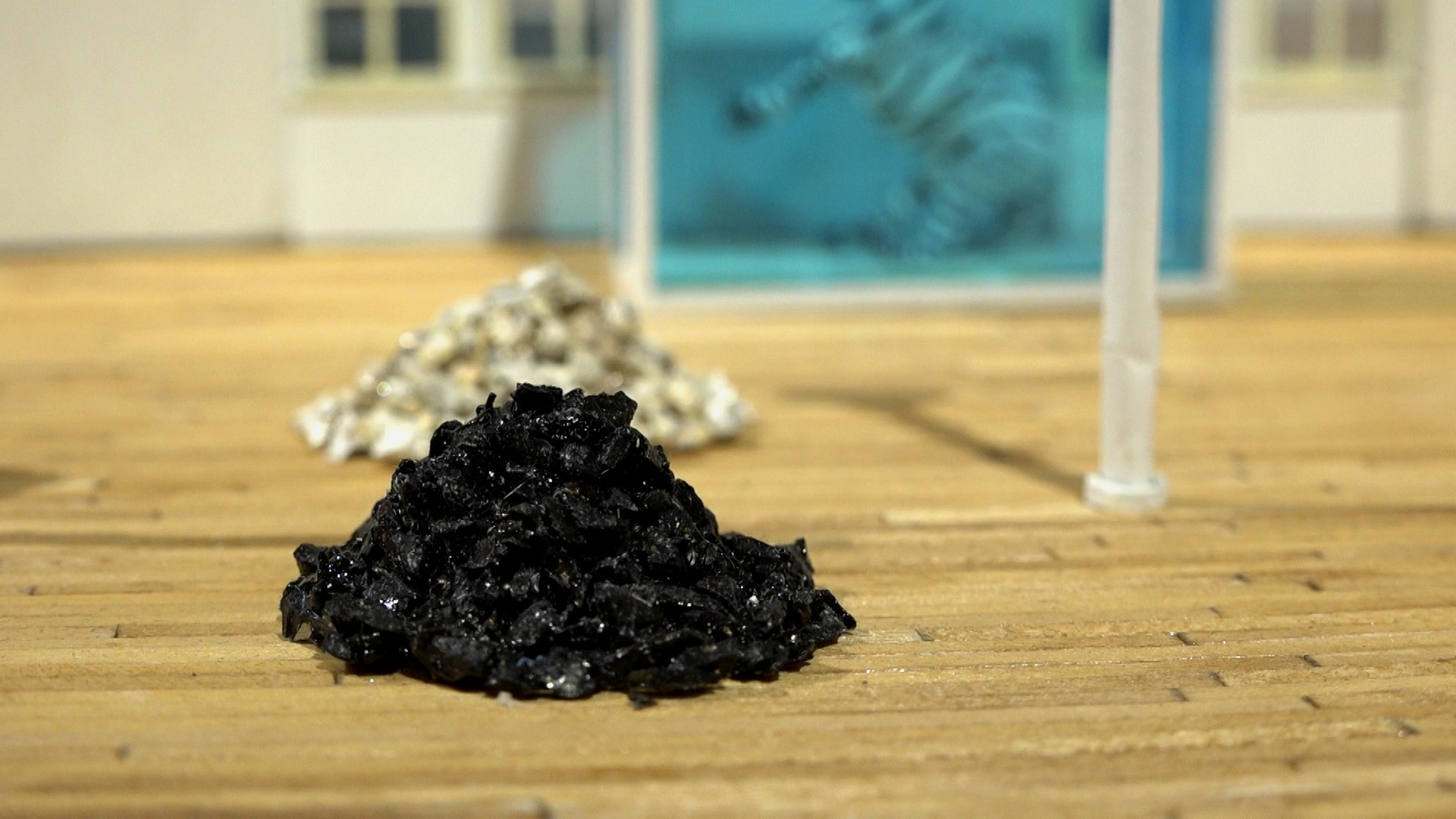
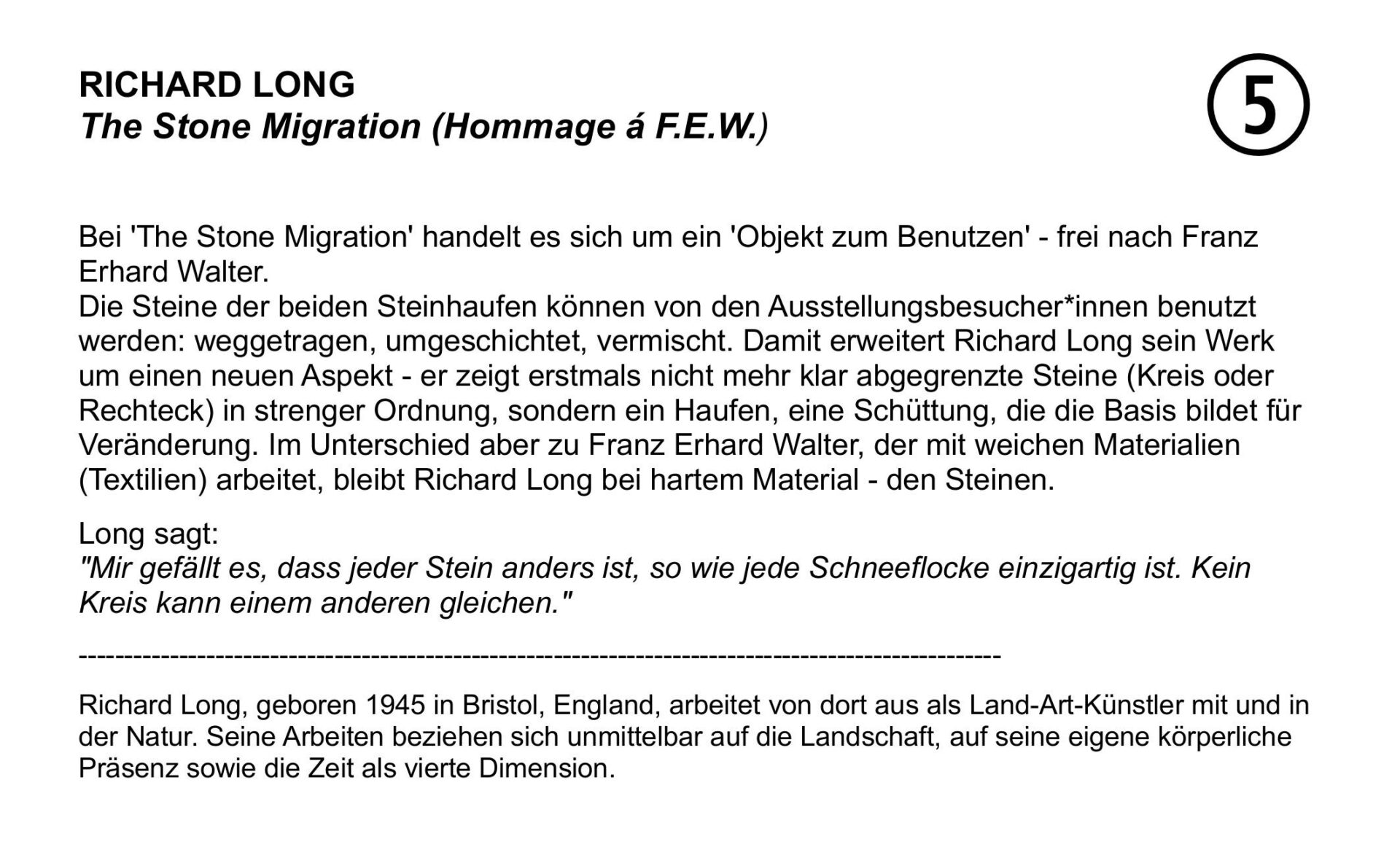
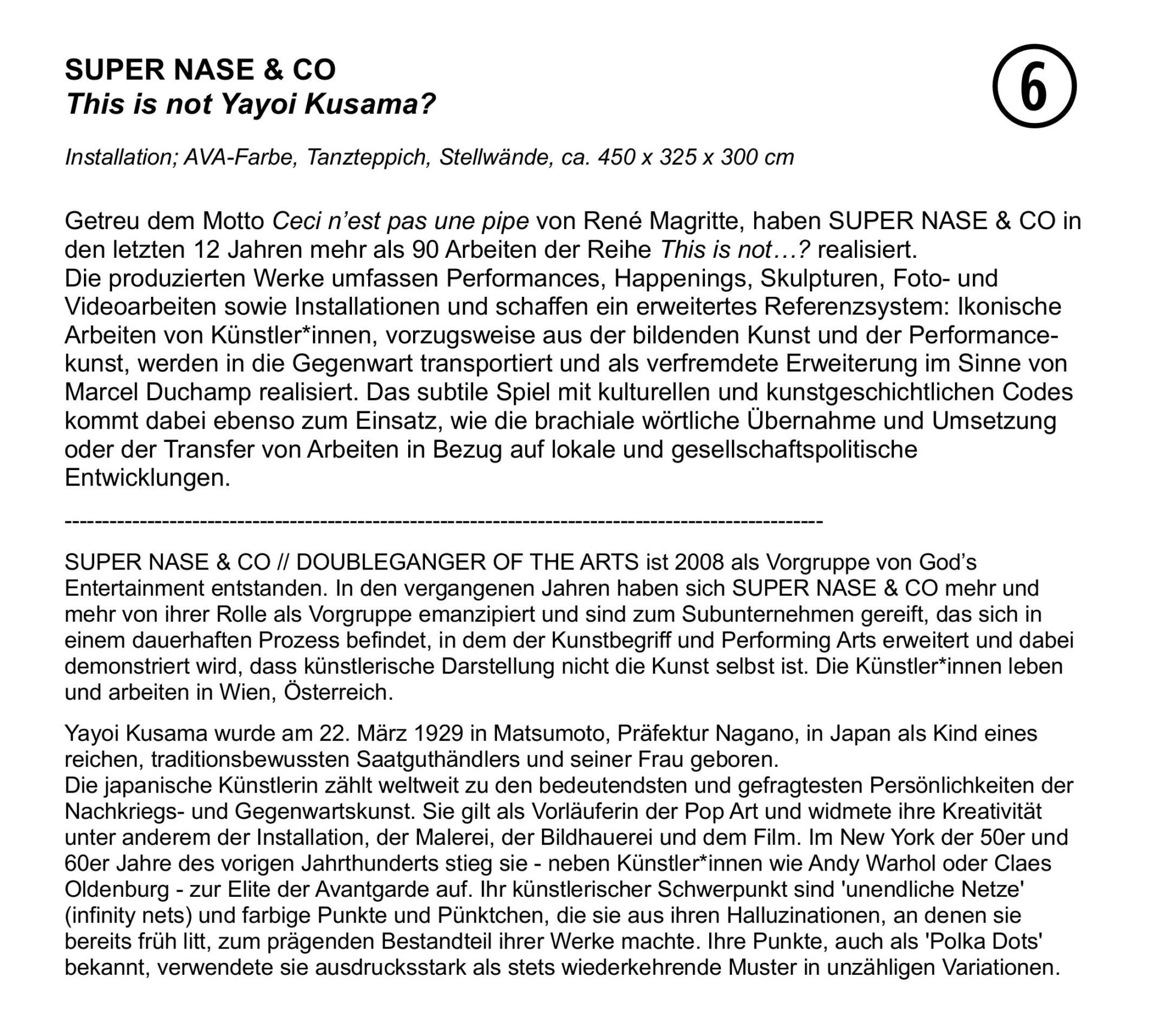
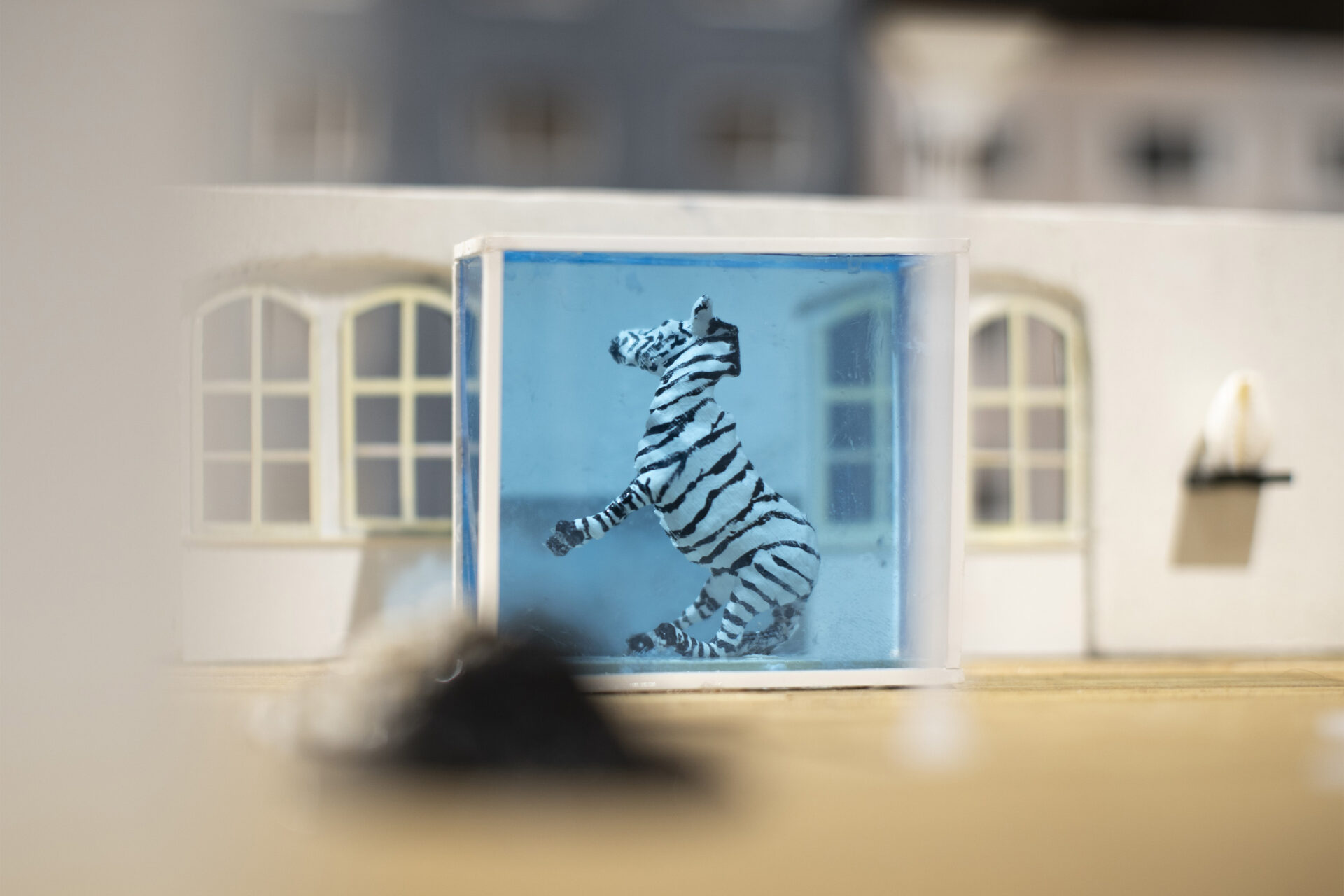
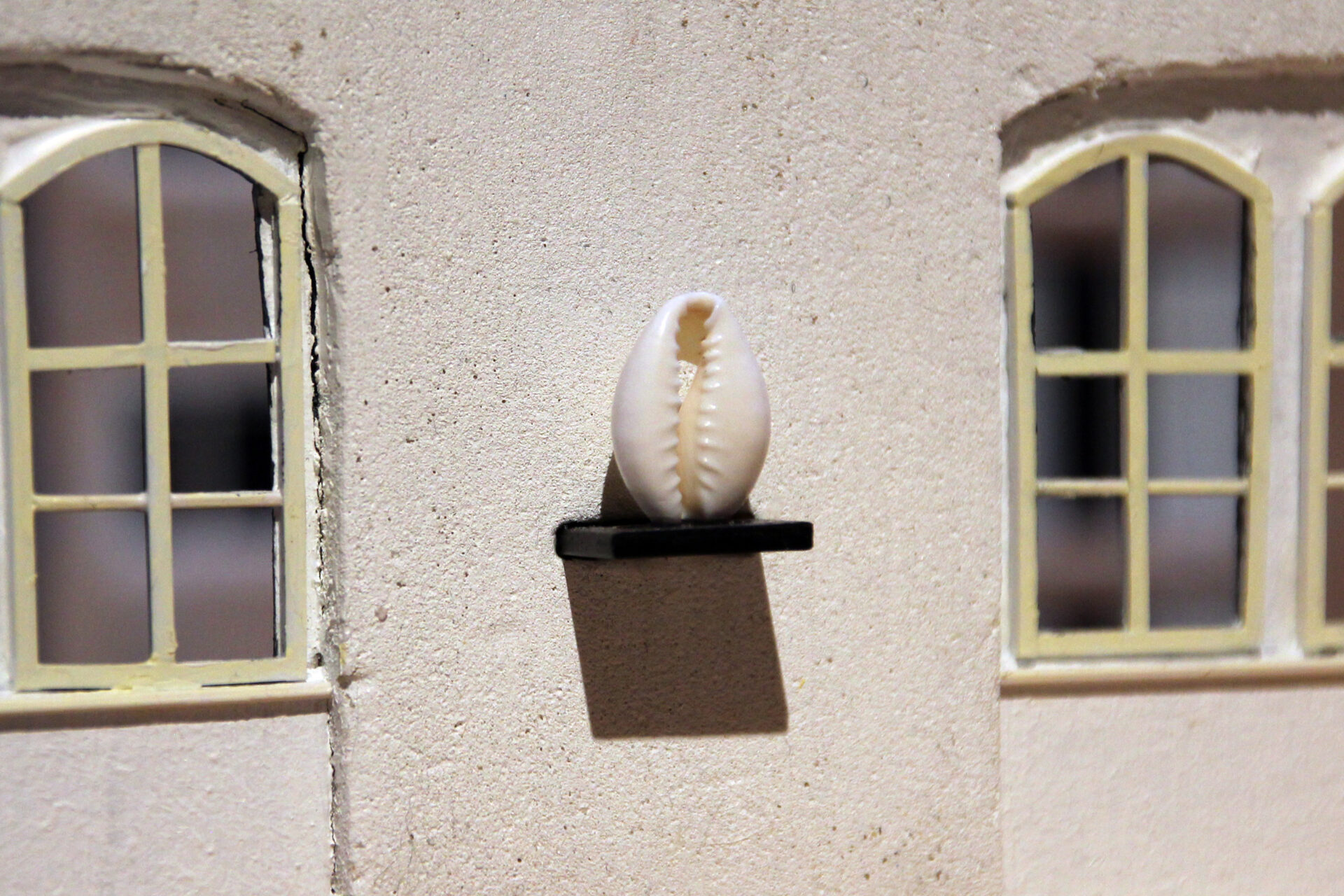
The individual artworks + the accompanying booklet articles:


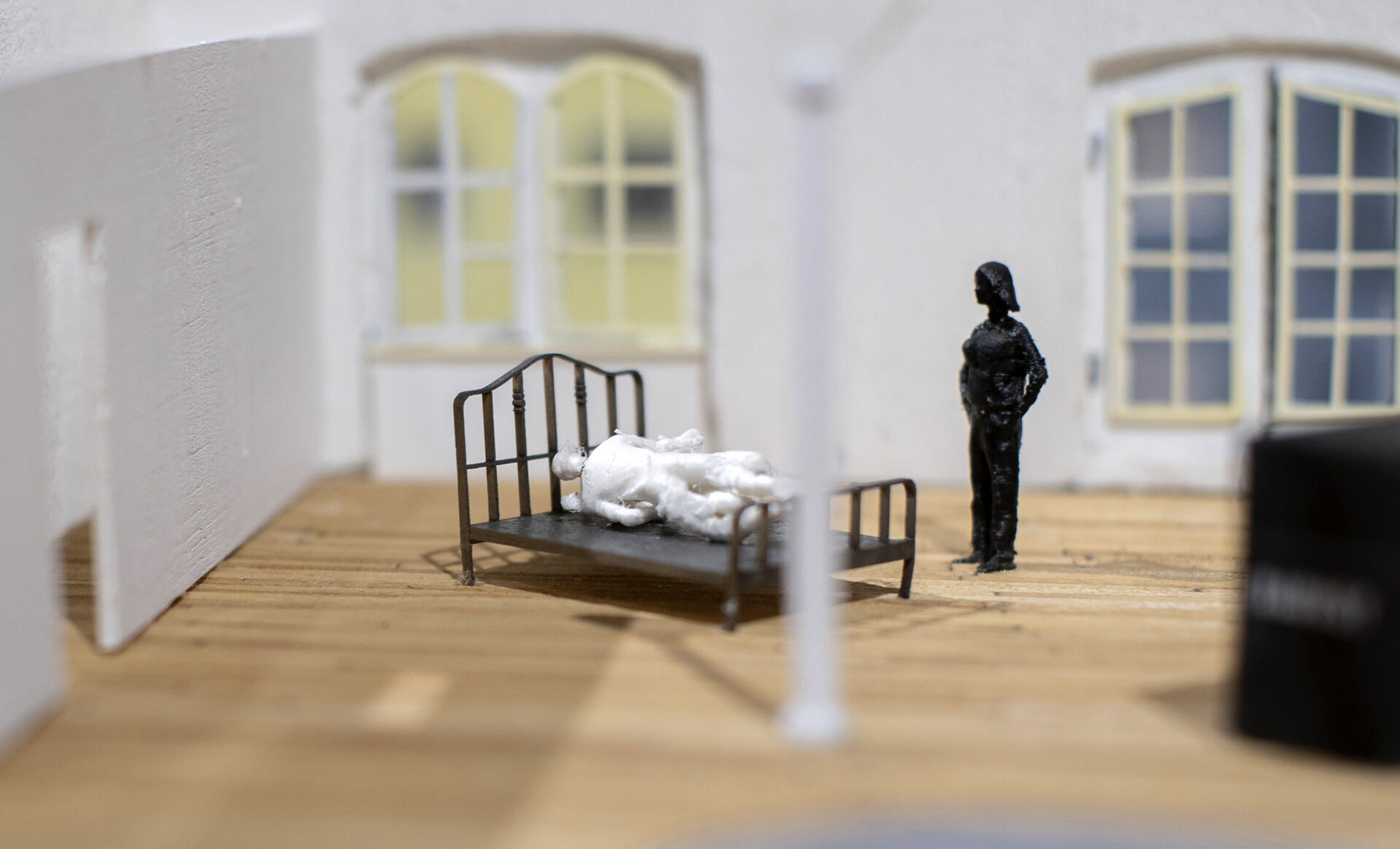
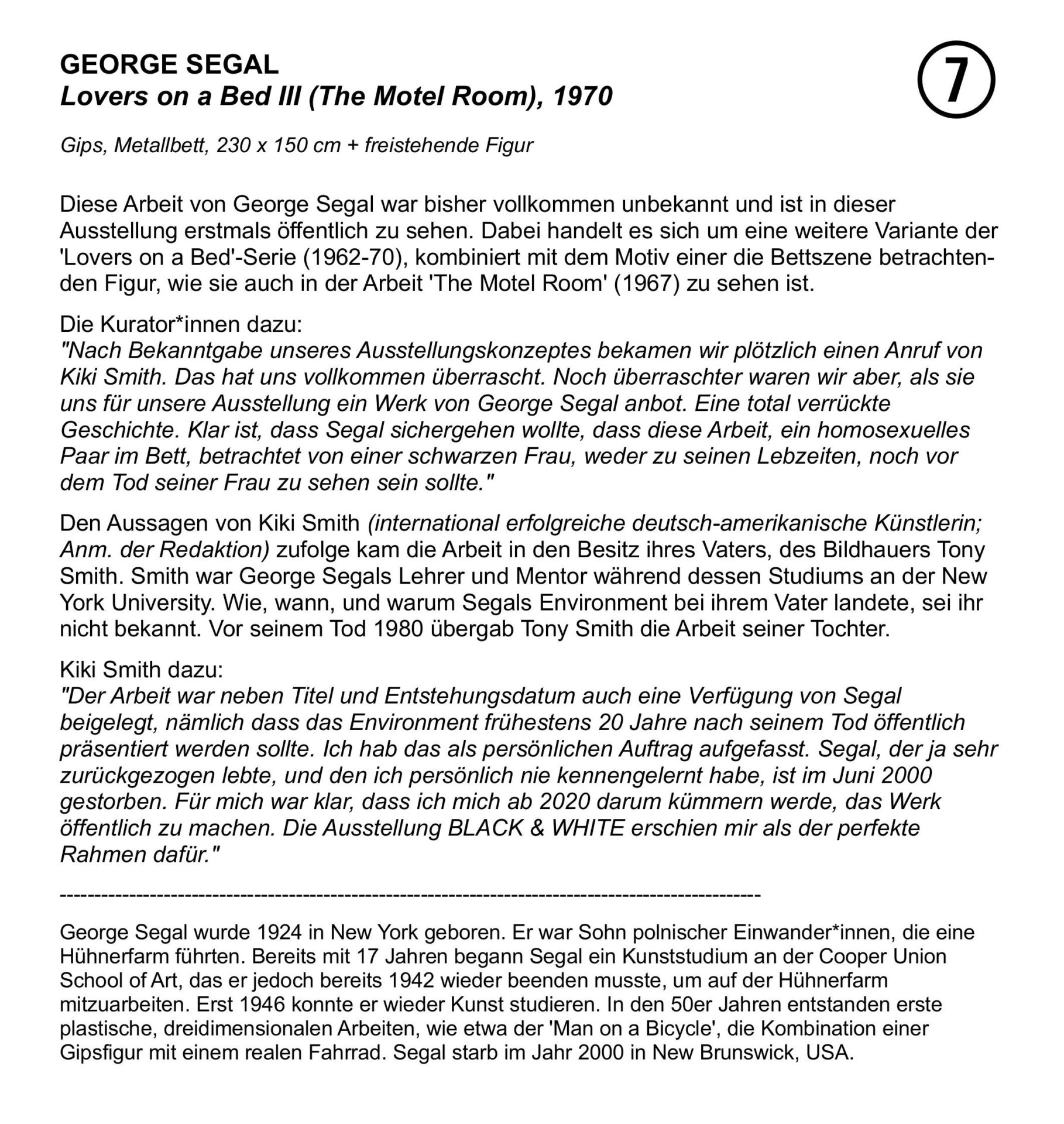
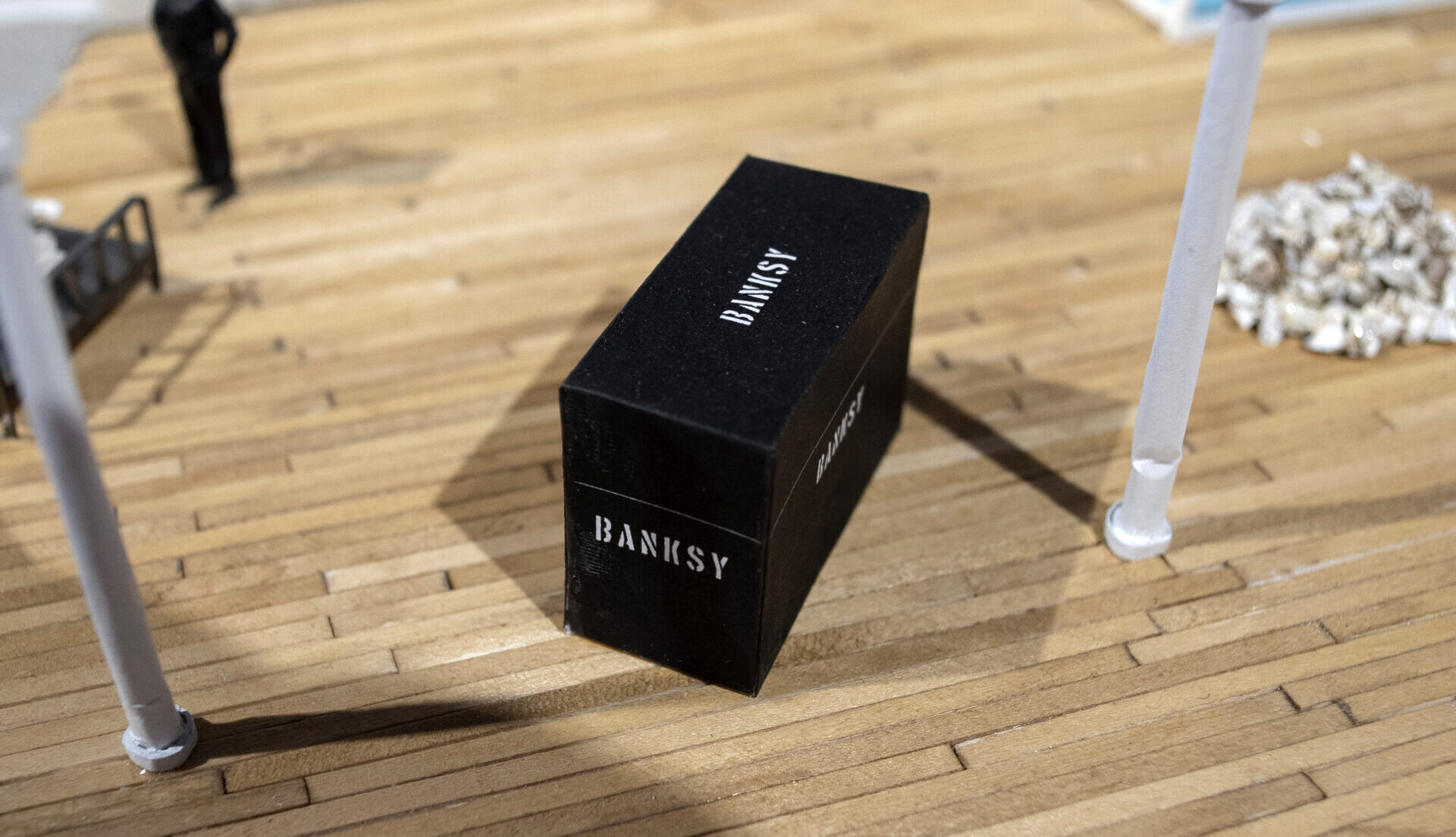
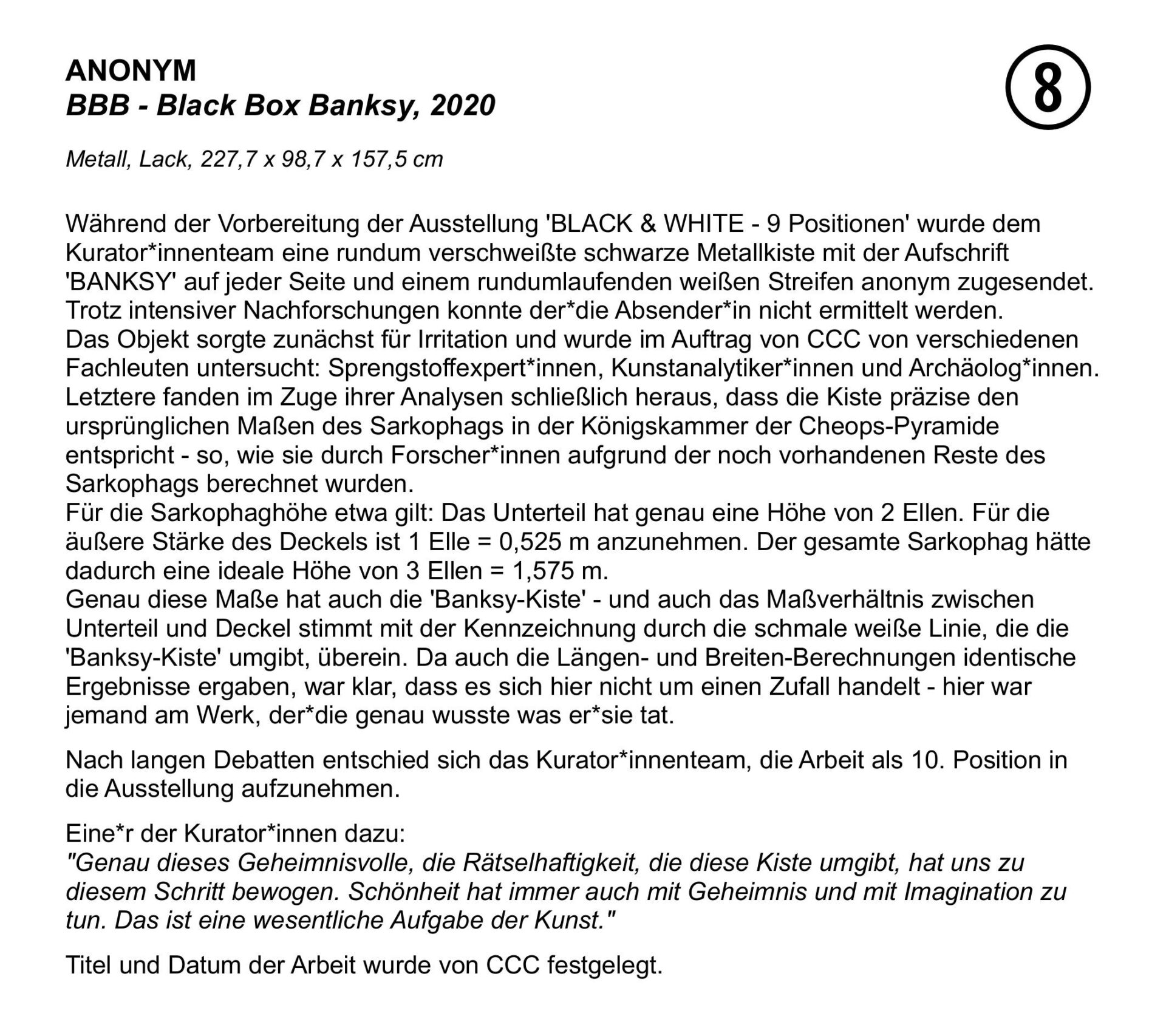
BLACK & WHITE 3 – Theatre + accompanying booklet
Model at a scale of 1:50; L: 98 cm, W: 76 cm, H: 44.6 cm; various materials, electromechanical turntable, pushbutton, circular screen lighting
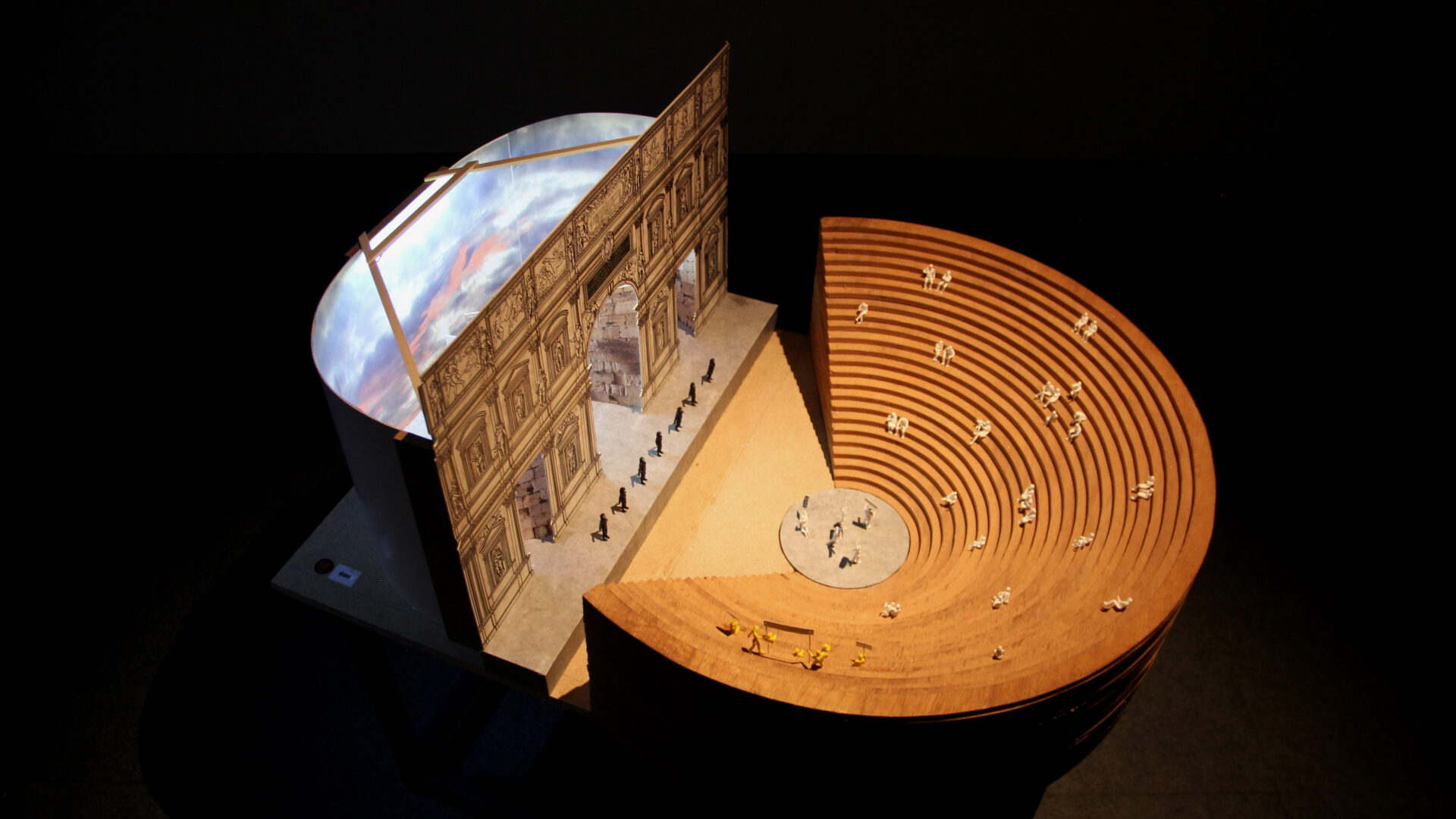
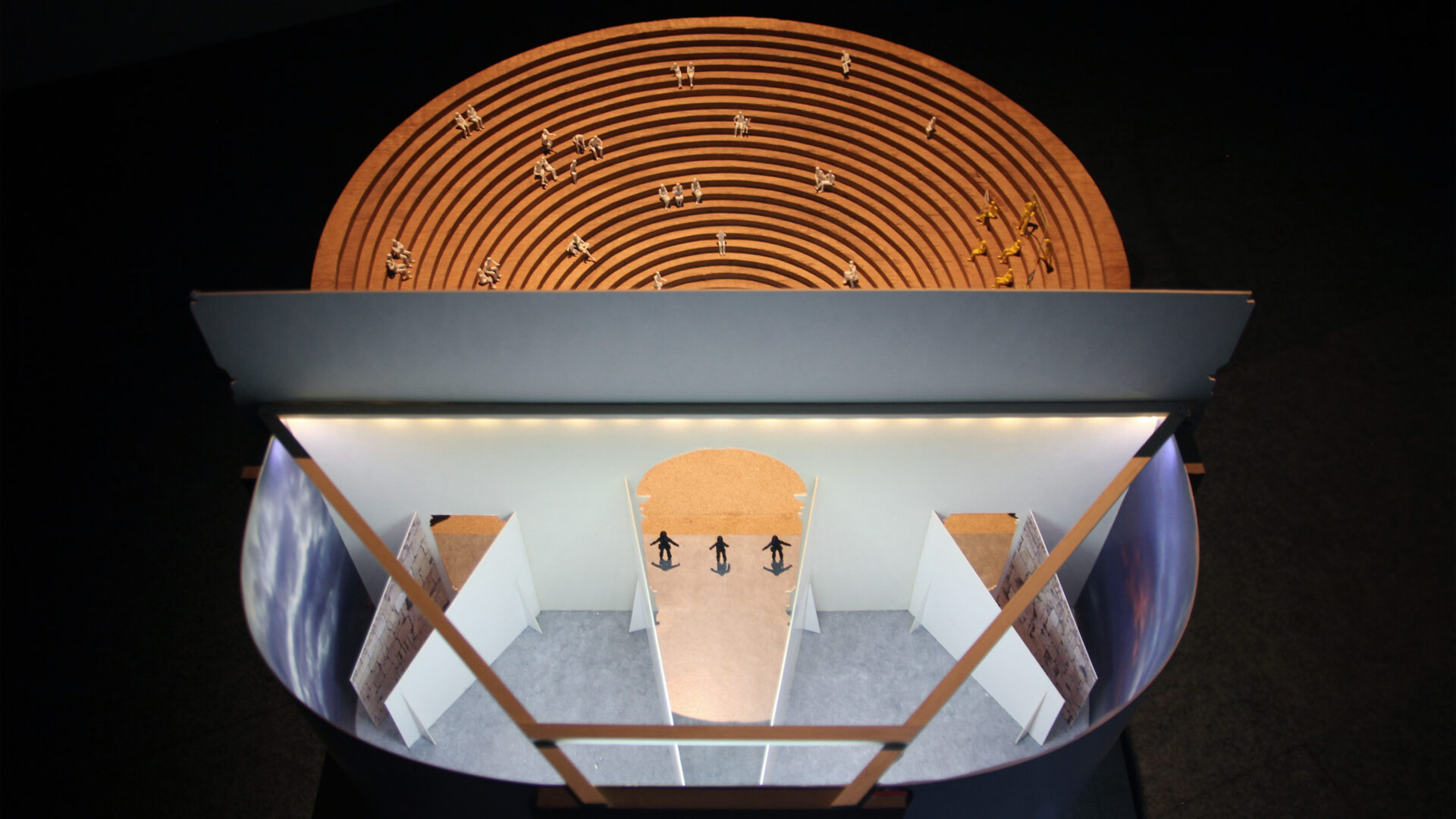
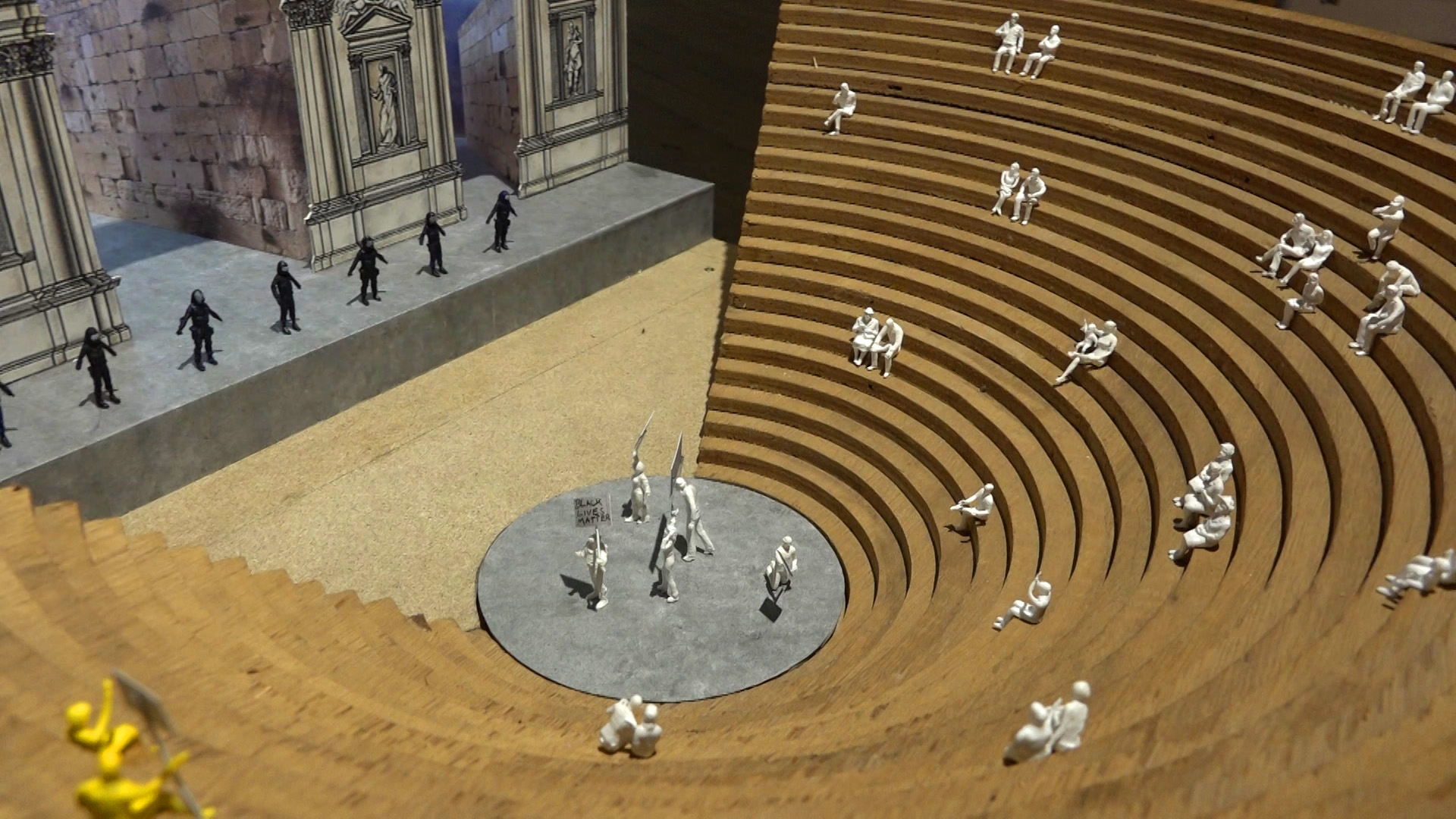
The scene depicted in the model shows the opening performance at the Südraum Favoriten open-air theatre in August 2028.
Organiser: Hoanzl Artists’ Agency (M. Niavarani & G. Hoanzl)
Director: Frank Castorf
Set design: Students from the Academy of Fine Arts Vienna
Cast: Hanne Brinkmann, Ludwig Hartau, Sabine Impekoven, Lissy Lind, Mia May, Martha Novelly, Ressel Orla, Fred Sauer, Fritz Spira, Curt A. Stark, Grete Weixler, Friedrich Zelnik
Technical and production support: ProSiBe
In 2028, the City of Vienna’s Office for Urban Development finalised plans for the development of the ›Südraum Favoriten‹. The PR department accordingly planned high-profile projects. Among others, it commissioned theatre director Michael Niavarani to set up a temporary open-air stage on a scale never seen before.
Niavarani, who had previously organised several smaller open-stage projects, such as the ›Globe Wien Open Air‹ and ›Theater im Park‹, was enthusiastic:
»This initiative demonstrates once again how strongly the city is committed to its role in promoting cultural projects as a catalyst for enhancing the quality of life of its citizens.«
(Interview in ›Die Presse‹, 24 March 2028)
A gigantic arena-style stage was constructed, modelled on an ancient theatre (audience area: 38 m wide, 27.5 m deep, 10 m high), featuring a chorus area that served as a revolving stage (diameter: 8 m).
The base for the skene – which could vary depending on the performance – was a stage area 2 metres high, 34 metres wide and 17.5 metres deep, enclosed by a 14-metre-high, freely configurable circular curtain.
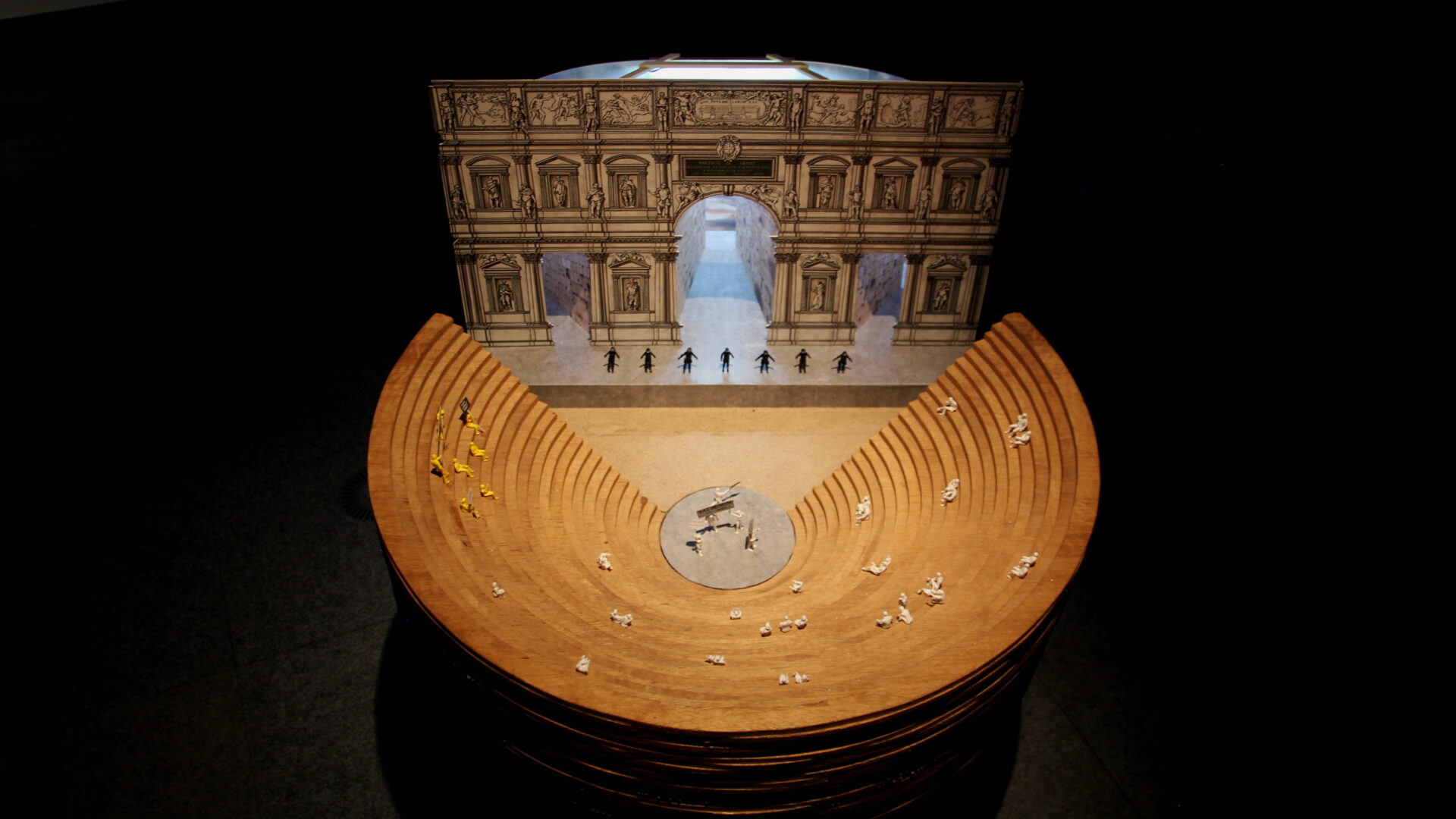
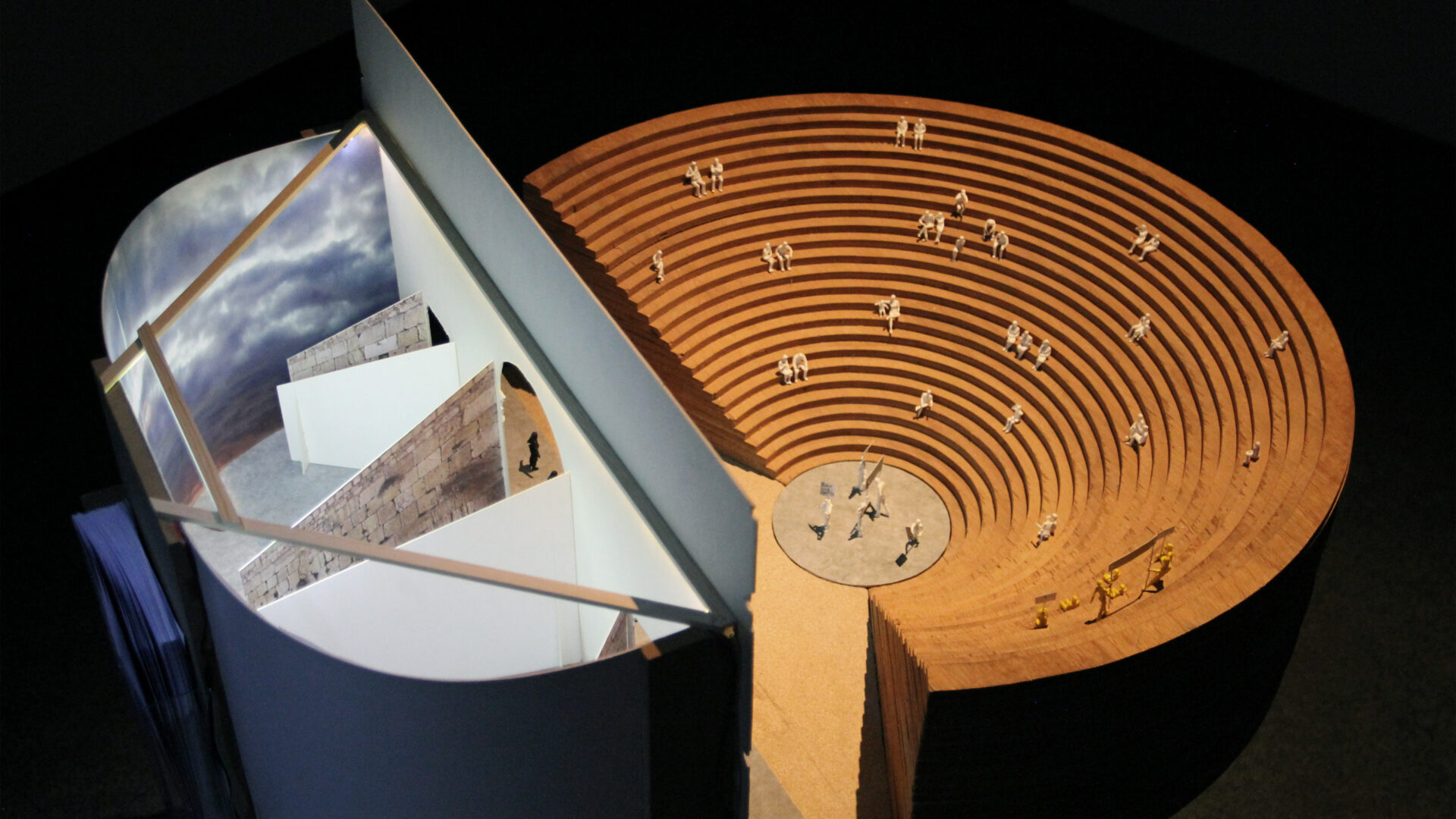
Niavarani managed to secure the German director Frank Castorf for the opening production. Castorf commented:
»What interested me about this project was this, taken literally, ›utopian field‹. When Michael first approached me, I initially thought it was just this completely exaggerated, unrealistic ›Wiener Schmäh‹ (a special kind of Viennese humour; editor's note), and you have to be suspicious about things like that. (Laughs). But I realised very quickly that he was serious about it. The Viennese are really quite peculiar – you only have to look at the Danube Island, or the Lobau Tunnel. (Laughs). But it soon became clear to me that I was the right person to bring this ›utopian field‹ to life. Especially as the first one.«
(›The Complexity of the World in the Field‹; Interview in ›Theater heute‹, Nov. 2028)

The set design was developed by Castorf in collaboration with the set design class at the Academy of Fine Arts in Vienna. One student commented:
»It was really crazy that we were allowed to work with such a big-name director. And he was really nice. But right from the start, I got the impression that he already knew exactly what he wanted, and that we couldn’t really bring our own ideas into it. I think he was completely obsessed with the Teatro Olimpico right from the start – that was his vision for the set – and it was then just a matter of figuring out how to realise that in terms of formal aesthetics. And in the end, it did work out. Although I have to say, I find it a bit strange to simply take Andrea Palladio’s design and blow it up. In the end, you’ve got a set that’s 34 metres wide and almost 20 metres high, which looks good and is impressive simply because of its monumentality, but I do ask myself, what’s the point of it all ? Simply saying that the facade represents the project of failed modern bourgeois humanism – which is exactly how Castorf explained it to us – isn't enough for me, somehow.«
(Audio interview, 16 January 2029, unpublished. Otmar Wagner’s private archive; transcription: Katharina Fischer)

Excerpt from a review of the performance in ›Nachtkritik‹, 23 August 2028:
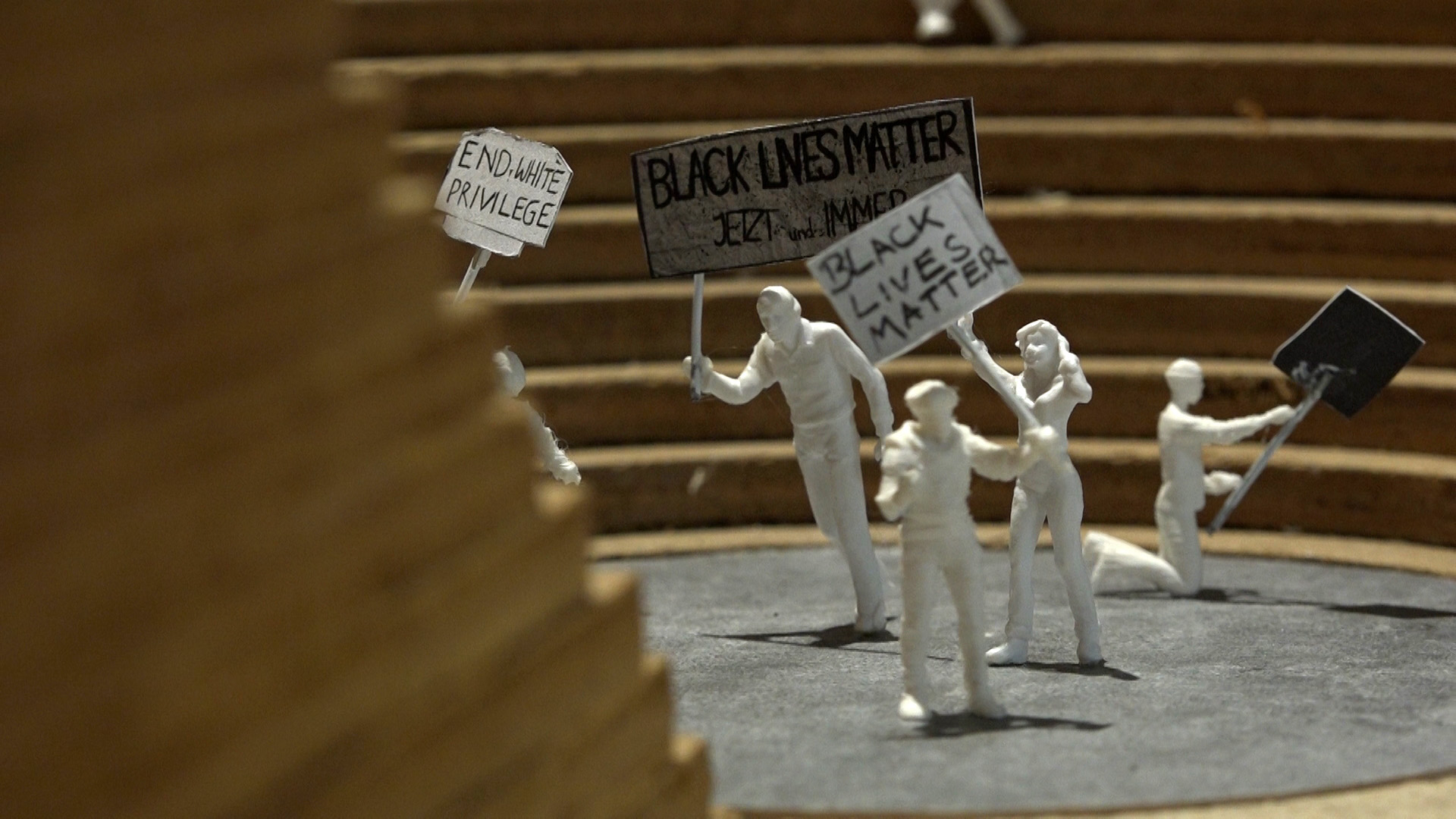
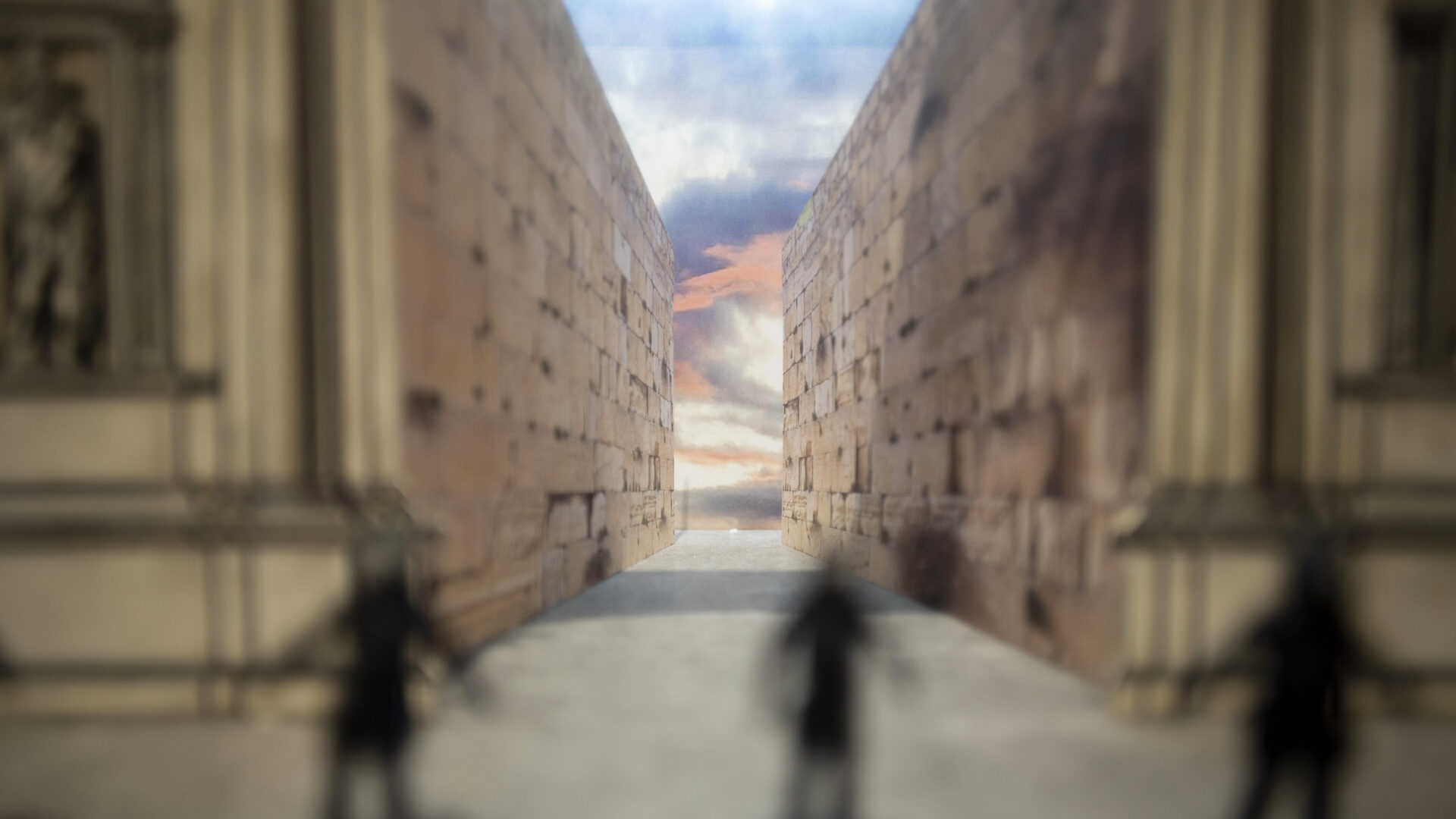
»(…) and then it started to drizzle. And darkness descended too. Never mind, because Castorf has brought his own sky with him: a brightly illuminated evening glow. We reach this flaming inferno when we look through the strict central-perspective arrangement – when we look through the barrier, the monumental replica of the front of the Teatro Olimpico, and this view reaches the horizon along the walls, along the fragments of the Western Wall in Jerusalem (which seem like quotations); when the view leads from the ideal of humanist self-understanding, via the Holocaust and global boundaries, to a gloomy sky, then one realises that a grand master is at work here. Castorf does not make many words. From somewhere, Black Lives Matter slogans are being chanted. The police (state power) take up their positions. The world (the chorus) revolves (around itself?) – in an endless loop. Total avant-garde. Touching. Shocking.«
An anonymous reader commented on the ›Nachtkritik‹ article:
»This is again typical of Castorf the do-gooder. The Western Wall is being used here as a symbol of the Holocaust and the debate on global borders. What Mr Castorf doesn’t mention, however, is that the women – strictly separated from the men – are only allowed to use a quarter of the wall for prayer. He also ignores the fact that the Israeli women’s rights organisation N’schot ha-Kotel (Women of the Wall; editor’s note) has been campaigning for almost 40 years for the right of Jewish women to pray at the entire Western Wall. And this without any success. Castorf has obviously not left behind his ultra-Orthodox mindset and misogyny. I need only remember that awful interview in ›Die Zeit‹ 10 years ago, in which he claimed: ›We have a Women’s World Cup and a Men’s World Cup, and there’s a huge difference in the quality of play. (…) If a woman is better, I’ve got nothing against it. It’s just that I haven’t seen many of them.‹ – Bloody great, you asshole! – I recommend reading the open letter to Castorf written by the dramaturg Felizitas Stilleke! (›Die Welt‹, 4 July 2018; editor’s note). I’m slowly getting tired of such old, white, heterosexual men still dominating public discourse in the arts!!!«
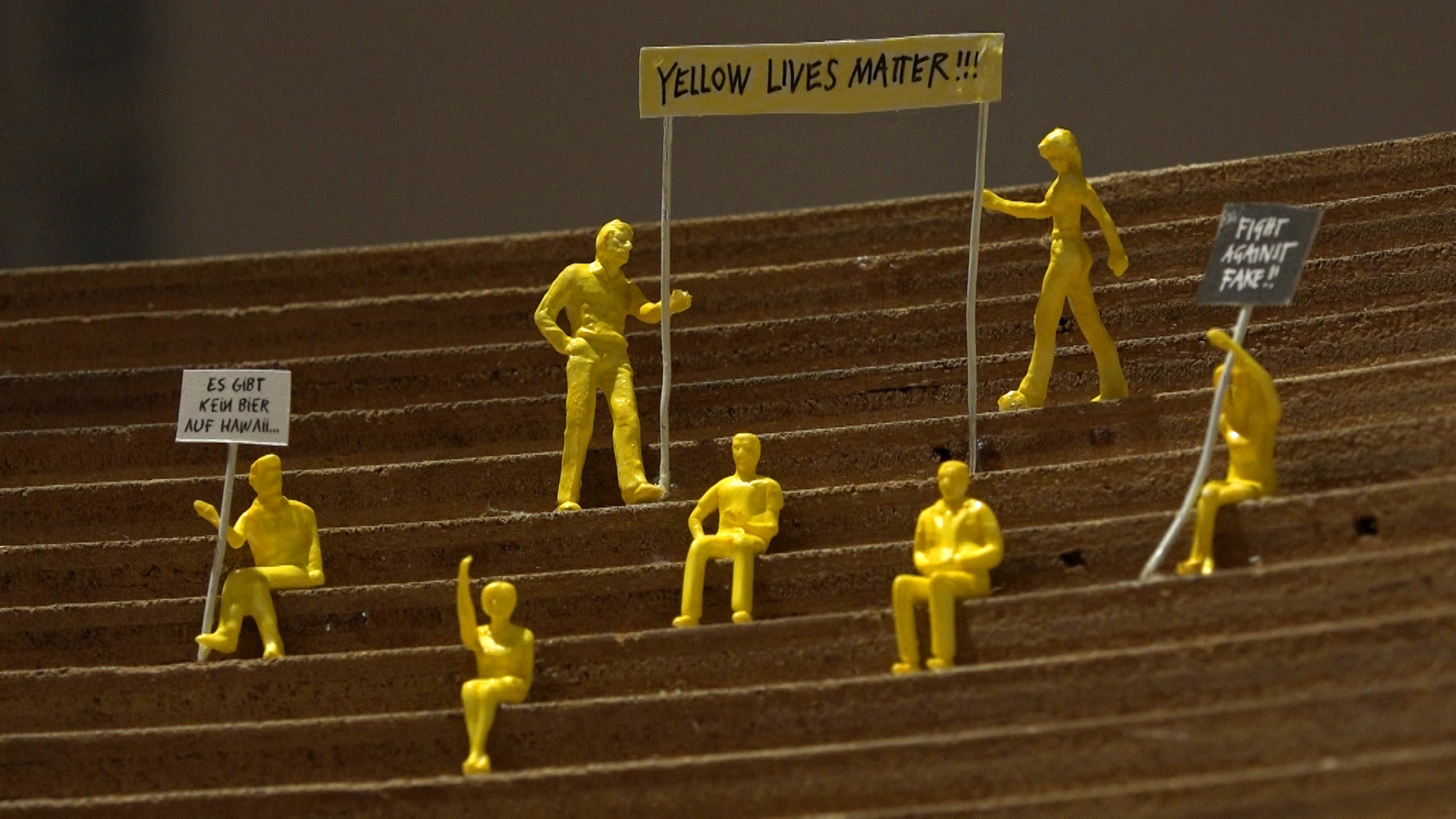
During the performance illustrated in the model, a flash mob in the audience caused a scandal – which was immediately posted under the hashtag #letshaveyellowfun.
According to eyewitness reports, it was just a ›drunken escapade‹ (some Austrian politicians would call it ›B’soffene G’schicht‹) by a group of Asian tourists. After the security staff intervened and the troublemakers were removed, the performance could continue.
Photos: © Joe Albrecht, Otmar Wagner